
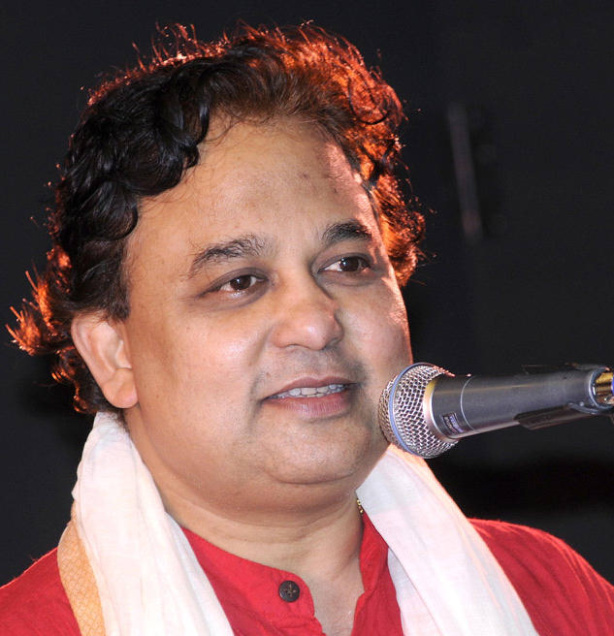
 Jayant Kastuar lets his dance do all the talking. Mesmerising the world with his delicate hand gestures, seamless spins and intricate footworks, this maestro imbibes the sheer beauty of Kathak with elan. Sashaying from one stance to another in gay abandon, Jayant’s fluid motions, kaleidoscopic at times, bring out the intrinsic ease of Kathak before the audience. This acclaimed dancer, who had clinched myriad national and international plaudits over the years spares some time for the City Express on his visit to the capital city.
“Kathak is not only about the ‘Nritya’ and the footworks involved with it, ‘Abhinaya’ (acting) is also as important. When one venture into Kathak, he should also take into mind that it is also his first step towards spirtiual enlightenment,” says Jayant, who was touted as a dance prodigy in the 1960s.
Hailing from Jamshedpur, a melting pot of various cultures and traditions, Jayant’s entry into the art world was predestined. Jayant was the tenth and the youngest child of his parents, who inculcated rich traditions and love for art in their children.
“I must have started dancing the day I was born. Because I was born into a very culturally-rich family where everybody was learning one artform or the other. My mother was the daughter of a prominent leader from Bihar. She belonged to a family 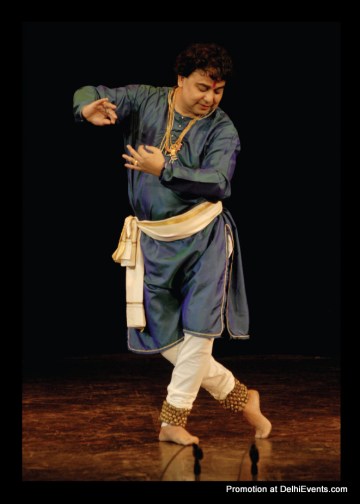 of social leaders and my father was a Zamindar. My mother could do all the ‘yogasanas’ until the day she died. So they were quite particular about their children learning an artform. When my sisters learnt Odissi I was pulled into Kathak,” says Jayant, who first performed before an audience at the age of two. It was his rendezvous with the legend Pandit Durgalal, while he was still very young that turned Jayant’s life upside down.
“I had the rare opportunity to learn from Pandit Durgalal and I consider it my biggest blessing,” says Jayant. Jayant, who follows the Jaipur Gharana, is often known for his authentic presentation of his Guru’s methods before the audience. However, he has developed a unique style that accentuates abhinaya while doing other Kathak nuances.
Unlike other dedicated artists, whose academics rarely match up to their stage persona, this dancer who studied history from the St Stephen’s college secured top scores during his post graduate studies. Later on, he did doctoral studies in Buddhist art. This quality, could have been the reason why he was sneaked away from the college to serve as the head of the dance department at Sangeet Natak Akademi, National Academy of Performing Arts, when he was barely 29. Later in 1999, he was promoted as the Secretary of the Akademi, where he served for another 12 years.
“The Akademi duties were taking away the time I should have invested on my dance. I was not able to perform at the Akademi conducted functions fearing the criticism that the secretary himself is performing at all the events. So in 2011, I resigned from the post,” says Jayant, who has been conferred with national and international honours such as Nritya Choodamani, Natya Padmam, Nritya Shiromani, and a felicitation from New York city council.
When asked dance was commonly perceived as a woman’s art, he says, that is a misconception as all our Natyacharyas (Dance teachers) including Nattuvar and Nataraja are men. “Look at Kathakali for instance, even the female roles are played by men even today. Kathak has been a male art to begin with, especially in Rajasthan from where the Jaipur Gharana comes from,” says Jayant.
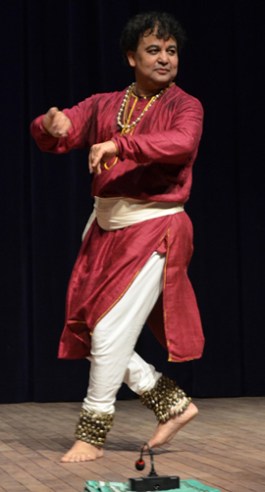 He feels current climate is quite favourable for dance as media and the reality shows give it enough popularity. However, he feels that dance should find the right balance without falling prey to commercialism.
“Just like the Britishers, America is also trying to colonise third world countries with an overdose of American programmes. By showing their second grade movies and TV programmes they are inculcating violence in our children. That is something one should be aware of,” says Jayant.
He leaves us speechless with his knowledge of indigenous Kerala art forms, Koodiyattom, Nangyarkooth and Kathakali. His observations are bang on, easily revealing his profound sense of awareness about dance, his sole passion.
 An Insomniac's Musings