
You could say my penchant for cinema began way before I even knew how to spell ‘cinema’. Not in the classrooms of a fancy film school, but in sleepy, mist-soaked Pulpally, Wayanad. Back then, my father and his intellectual circle of friends, including teachers, artists, thinkers and even Barber Subran, would organise local cultural fests that smelt of damp earth, cigarette smoke and redemption, with film screenings squeezed between heated discussions about Marxism, Beatles and Che Guevara.
I must have been way too small to grasp the gravity of what surrounded me. But I remember a different kind of screening altogether. A random horror film playing at the local theatre, the only movie on that week. That tiny, dimly lit, echoey hall still lives in my bones. I blinked once in 90 minutes and didn’t sleep for three days. That was my first cinematic trauma, and the start of my lifelong aversion to horror films.
Long before college, names like Eisenstein, Kurosawa, Bergman, De Sica, Adoor Gopalakrishnan, Satyajit Ray and Mrinal Sen floated around our dinner table frequently. I didn’t read about them in textbooks, I overheard them between sips of strong filter coffee and experienced their movies at festivals and Sunday afternoon shows on Doordarshan. So, when I joined the Mass Communication and Video Production course in 1999, I arrived with opinions, and strong ones at that. One of my classmates would later tease me for not shutting up about Adoor’s ‘Elippathayam’ in our first-ever group discussion. I was sure embarrassed but soon I changed my ways.
At the time, I held on to a quiet prejudice, absorbed rather than taught, that enjoying Bollywood masala or slapstick comedies was for those with simpler tastes. We weren’t even allowed to watch Hindi films at home. It was always “too loud”, “too silly” or “not arthouse enough”. And yet, over the years, life softened that edge. I’ve come to believe that joy isn’t a guilty pleasure, it’s a holy one. If a peppy dance number can lift someone’s spirits, who am I to frown from my self-appointed arthouse tower?
When design said bye and journalism said hi
To be fair, journalism wasn’t exactly my Plan A. After pre-degree, I toyed briefly with the idea of fashion design, not out of passion, but because I could draw decent human figures and some confused trees. My parents decided I was “creative” and told me I would fit nicely into NIFT or NID. They believed a creative stream was my best bet. I thought the entrance exam would be fun. It wasn’t. It felt like one of those coaching centre challenge tests where everyone else had come with five years of prep and I was holding a 2B pencil and hope. I failed, obviously.
Before that, though, there was a brief but intense romance with oil painting, just after my tenth standard. It was during my “I feel things deeply” teenage phase. Some of Abba’s friends said I had promise. In hindsight, that might have been polite Mallu-speak for “not bad”. But one afternoon, I stained the ironing table during a painting session. Abba lost his cool and hell broke loose. I cried. In a fit of teenage melodrama, I tore up every painting I had ever made and declared that I would never paint again. And I didn’t.
But even as that door closed, another creaked open quietly. Over a decade later, as a features writer at a national newspaper, I found myself gravitating toward art stories. I loved the quiet hush of galleries, the smell of fresh paint, the slow, thoughtful way in which artists spoke. I wrote about shadows and brushstrokes, and for once, Abba was proud. He said I should become a critic or a curator. But I was already knee-deep in education loans and deadlines. Romance with art was one thing, my son’s school fees were another.
A quiet foray into the world of film making
Speaking of the rather unique and chaotic course I enrolled into, our class started off with over 20 students. But once word got around that we had a subject called ‘Creative Writing in Malayalam’ that involved an actual second-year project, a wave of uncertainty swept through the room. A few students had done their schooling abroad and didn’t even know how to read Malayalam, let alone write creatively in it. And then there were those who had chosen it as a second-best option, after their engineering or medicine dreams didn’t quite pan out as planned.
We eventually shrunk to 16, six girls, ten boys and a lot of confused ambition. None of us really knew what we had signed up for. Honestly, I’m not sure the course directors did either. Which is probably why, instead of theory-heavy introductions or formal modules, our first real academic experience was being sent off to the Soorya Film Festival. Forget textbooks, we had Ray’s Jalsaghar, Devi and Charulata as our syllabus.
But things were slowly warming up and becoming more interesting by the day. At one of the screenings during a film festival, we got bored. Painfully bored. The films were agonisingly slow. And since we’d just learned about ‘continuity errors’, we took it upon ourselves to spot them all. We whispered, giggled, and critiqued every frame like self-declared Bharadwaj Rangans and Anupama Chopras on a sugar rush.
Come interval, enter Long White Beard, a man who resembled not the kind, twinkly-eyed Dumbledore from the early ‘Harry Potter’ films, but the fierce, irate version from ‘Prisoner of Azkaban’, storming in like we had personally offended his entire cinematic belief system. Now that I think back, he also bore a striking resemblance to Kuttoosan from ‘Mayavi’. He had been sitting behind us the whole time. As the lights came on, he marched up and unleashed a verbal storm we did not see coming. He absolutely laid into us, not gently, not vaguely.
In a twist of pure irony, he picked on the quietest boy in the class, the Chinese ambassador’s son, who hadn’t uttered a single word all evening. Soon after, he left the course and never took a glance back. Honestly, I wouldn’t blame him.
Tears streamed silently down my cheeks. Not because the man was mean, but because I felt exposed. But that moment stayed with me. Even if a film doesn’t move you, someone poured themselves into that frame. It deserves your silence, at the very least.
My experiments with scriptwriting
Given the amount of film exposure we received, you might think that film study would have been a major part of our curriculum, but the course didn’t dive too deep into film theory. But we had plenty of opportunities to try our hand at direction and production, even though we had to fight over the limited equipment, and wait patiently for our round. One of the highlights was a scriptwriting paper in the second year, where we got to stretch our creative muscles and explore story craft beyond the classroom.
And to my shock, I secured the top spot in scriptwriting. Except for a few poetry competitions, I’d never topped anything in my life. But something about it just clicked, scenes, characters, story arcs, the rhythm of dialogue. It felt like discovering a language I already knew.
That tiny win gave me courage. Years later, when my son was four, I applied to the prestigious Film and Television Institute of India (FTII) in Pune. I cleared the entrance test from Kerala, was invited to attend a week-long workshop in Pune and loved every single second of it. But during the final interview, I remember the FTII veterans mentioning, “It’s not an easy field for a single mum.” And just like that, I realised I wasn’t being seen as a student or a storyteller, but as a situation. I may not have been the perfect candidate for it, but it still hurt me.
At 26, I knew I wouldn’t be seen as a learner, but only as a label. That was when the idea of studying abroad, somewhere my marital status didn’t precede my ambition, began to make sense.
First-class entry into creative circles
Despite the chaos, being a BVMC student had its perks. We had access to cameras, a darkroom that occasionally hosted poisonous snakes, and special student passes to film festivals. In 2001, we helped run the media centre for IFFK at Kanakakkunnu Palace. It sounds glamorous. It wasn’t. We were mostly glorified interns but we didn’t care. We had front-row access to the kind of cinema that crawled under your skin and stayed there.
Year after that I got a chance to freelance with the Chalachithra Academy and to work for the IFFK (International Film Festival of Kerala) festival book project. It was during this time that I landed my first byline in ‘The Hindu’. Bina Paul was already an acquaintance, thanks to Abba. Adoor Gopalakrishnan was the Chairman, and yes, I still have the certificate signed by Adoor kept like a pressed flower between the pages of time.
I got to read the synopses of the films to be screened at the fest and hunt for corresponding images, the kind of nerdy joy only true festival kids understand. It wasn’t entirely unpaid either. We received a modest stipend, just enough to make us feel like professionals, without forgetting we were students.
It was the heyday of Iranian cinema, Majidi, Makhmalbaf, and Sadrameli were all the rage on the international circuit, and we couldn’t get enough of their films. Kim Ki-duk arrived next, who, for a while, was practically a household name in Kerala’s film circles, his films whispered about with reverence. But like many once-idolised names, his legacy was later met with uneasy silence. It was a tough lesson in learning that while art can move you, it doesn’t absolve the artist and that sometimes, you can’t fully separate the two.
Festival cinema was raw, unfiltered and famously uncensored. And yes, some folks attended only for those uncensored cuts. We didn’t judge. We were too busy feeling, and quietly absorbing lessons on cinema, culture, and sometimes, uncomfortable truths.
Swapping arthouse angst for ramen and romcoms
Over the years, I learned to let go. I didn’t feel the need to watch everything anymore. While most of my friends were hooked on Indian soaps, I was in my own little world, watching The X-Files, Friends, Buffy the Vampire Slayer, and Ally McBeal, rewatching Oprah episodes, and catching whatever came on Star World, Star Movies, or HBO.
Then, somewhere in 2008, I came across Korean movies and dramas. They were tender, a little twisty, and oddly addictive. By 2010, I was already rendering MVs of Super Junior and SHINee on YouTube, not even realising this thing I was enjoying quietly in my room would one day be called K-pop. Back then, it was just something I liked, simply because of the music and because it was different.
These days, I go where comfort leads me. Slice-of-life K-dramas, Turkish romcoms (mostly for Can Yaman, you know what I mean ;)), warm Mexican family dramas, the occasional J-drama that hits you right in the chest, Thai dramas and modern Taiwanese and C-dramas too with ridiculously cute leads. Historical Chinese dramas? I tried, I really did, but 80 episodes is a lifelong commitment.
Maybe it’s age, maybe it’s just life, or maybe, after years of slow, grey frames and heavy silences, I just want to watch someone fall head over heels over ramen and silly misunderstandings.
And yet, cinema has never really left. It’s been that quiet thread running through every phase of my life. Malayalam cinema, in particular, has always stood tall, subtle, subversive, way ahead of its time. Long before the rest of India began celebrating “content-driven” films, we were already churning out layered narratives with no dramatic background score to tell you how to feel. The pandemic only sharpened the world’s focus on it. With theatres shut, subtitles on, and nothing but time, many outside Kerala discovered the brilliance we had always known. That sensitivity is what helps me to equally enjoy an ‘Adolescence’ along with the deeply resonating ‘When life gives you tangerines.’
So yeah, these days I may lean more towards soft plots and cozy stories, but cinema, it’ll always be my first love. And who knows, maybe someday, instead of painting, I’ll finally sit down and write that script.

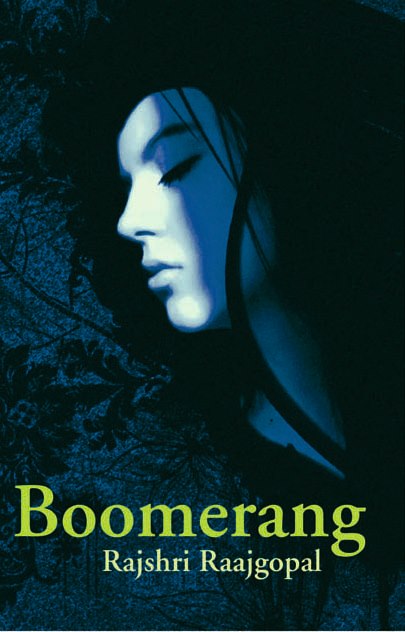
 Anna had to bear the brunt of her inept parents – an alcoholic father and a submissive mother – while growing up. Her Christian mother, who fled with a Hindu man in her teen years, was still a sore in the eyes of her relatives. Later, when her father leaves them to destiny, Anna finds a job at a five-star hotel. There she meets George, who marries her eventually. George, his parents and his sister found her presence interfering with their privacy. For them, she remained an outsider. The succeeding events lead to a miscarriage leaving her devastated. She later finds solace in Dev, an acquaintance of George, who married her and treated her like a queen. But the story doesn’t end there. When Dev, her dream man, sashays into her life, the desperate romantic in you may hope against hope for a happily ever after for Anna. But the darkness, lurking behind the closed doors of Dev’s house, is all ready to strike at Anna’s weakest moments. Rajshri succeeds to keep the suspense alive till the end, making the reader find the name of the book, aptly given. The author does not refrain from illustrating vivid sexual sequences between her and Dev, implying there is nothing wrong in women craving for sex.
 abilities. Sedunath doles out spaces for Patrick White and
  to draw inspiration from tradition especially its parallel streams.”


 An Insomniac's Musings