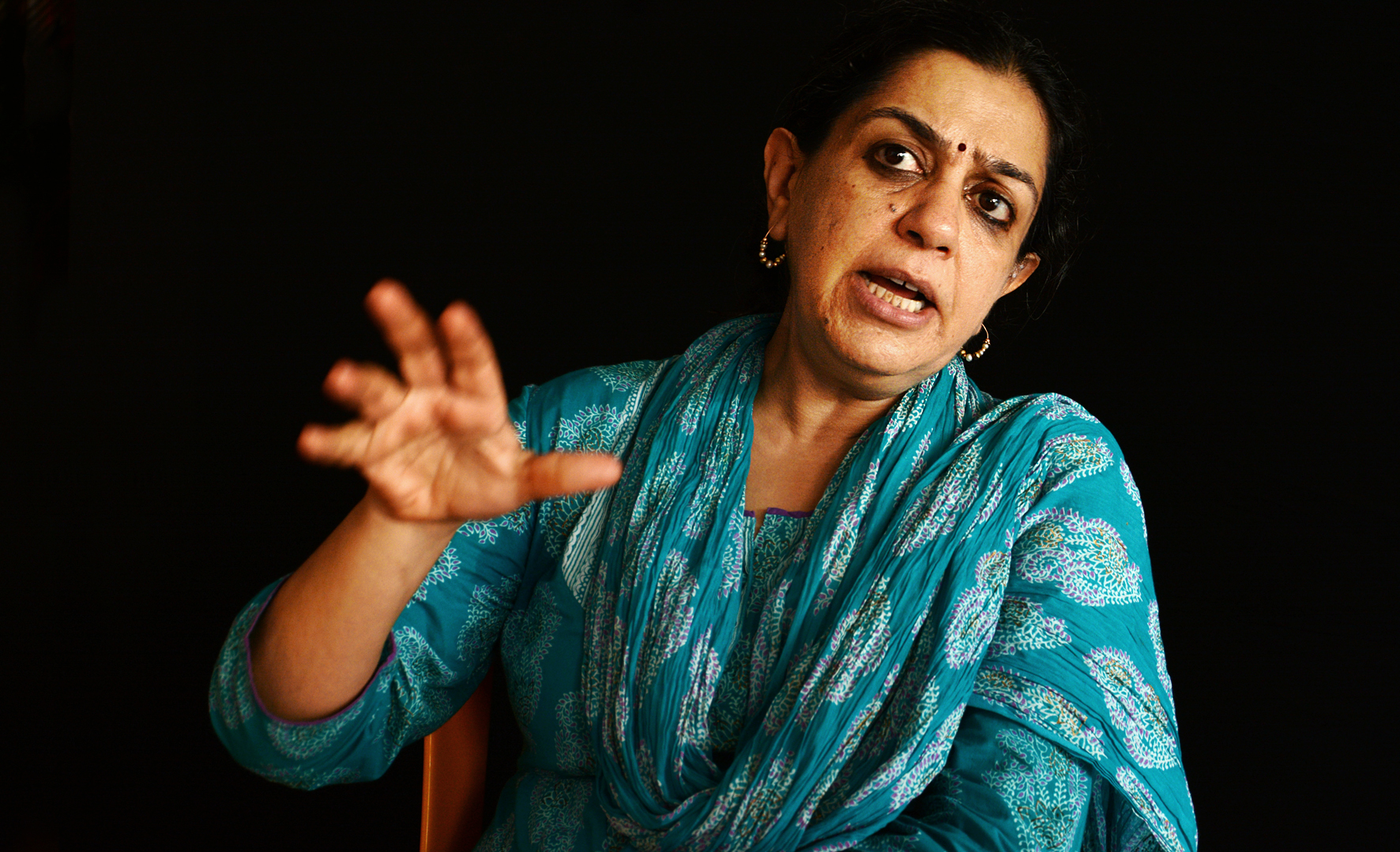
 Her films come with a hallmark of brilliance leaving no space for mediocrity. With extreme finesse that is inherent in a woman, she captures moments that are close to her heart. Saba Dewan, the name that resonates in the realms of Indian documentary filmmaking today, however, does not believe that women filmmakers are anything but special. This feisty Delhite, who has an enviable repertoire to her credit, is nothing short of a creative genius. Saba, who was the filmmaker in focus of this year’s IDSFFK, spares some time for the City Express .
“I am not making films for women or about women. Women makes 50 per cent of our population and my subjects happened to be about that 50 per cent. If a filmmaker’s films predominantly deal with male subjects nobody would go and ask him why he is making films about men,” says Saba.
 Ever since she could remember Saba had an intense activist streak in her. It roused whenever she was given an unjust situation to deal with. And in her famous article ‘Of chick charts, hen charts and other such women’s stories’, she says how she joined hands with other girls in St Stephens to fight against the discrimination they felt when the boys of the college rated them based on their looks. It is that profound sense of right is what makes this filmmaker exceptional. And her protagonists, who have no trace of obscurity about them, are no different. They are as real as they would come. Be it Rasoolan Bai of The Other Song (2009) or Riya of Delhi-Mumbai-Delhi (2006). When Rasoola Bai laments the loss of her identity to the time Riya, a bar dancer finds resort in a marriage.
“I always knew I want to say something to the society. This emotion was there forever. So I chose documentary for that purpose. I don’t feel sad about the fact that documentaries are not received like a feature film in India but they have their own audiences,” says Saba
Saba, who did history in her undergraduate studies didn’t know much about documentary film making until she joined 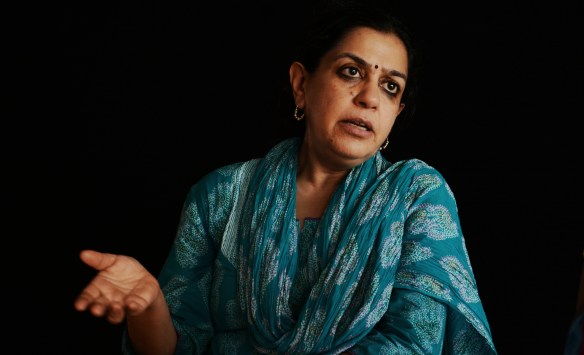 Jhamia Milia Islamia University in 1984. The university had just opened their Mass Communication Research Centre for which they were conducting entrance examination. Saba, who had no inkling about filmmaking got through the entrance.
“Before Jhamia I never got the chance to watch many documentaries. Films yes, but documentaries no. But there I got to experience the works of Anand Patwardhan and Deepa Dhanraj. I was wowed by Patwardhan’s work and I knew that is what I wanted to do in the future,” says Saba.
Saba, with her filmmaker husband Rahul Roy, has been channeling her complete energy in making films about the plight of Indian women. From depicting the story of tawaifs (courtesans) who were marginalized by the society and are on an imperiled state (The Other Song), to taking few destitute girls for a trek in the nearby mountains (Barf) and making it into a beautiful road saga, the filmmaker in Saba is always on a roll. Rahul Roy, who does the camera work for almost all her films, is someone she met on the University campus. They share a beautiful equation devoid of jealousies and tantrums.
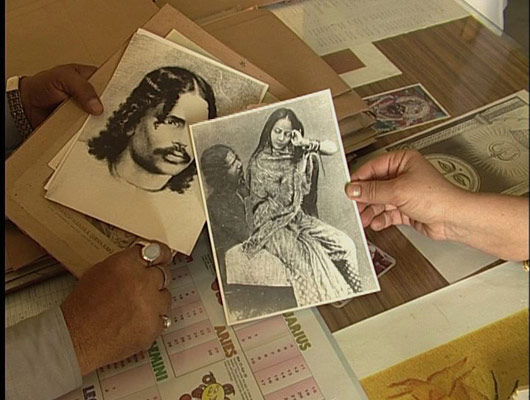 “Documentary film making is not an easy process. Even if we have many subjects to convey there are times we do not find enough funds to transpire it. I haven’t made a film in the past 5 years after The Other Song. Meanwhile I teach and do some writing. I am working on a book on Tawaifs from the experience I have gained from the making of The Other Song,” says Saba. Saba has no plans to get into feature films as yet but she cannot say what future has in store for her.
 An Insomniac's Musings