To Australia, With Love

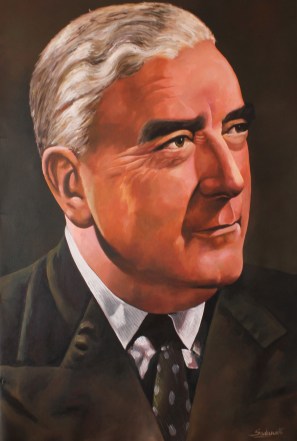
   sedunath (14)For a rank outsider, who knows Australia from the movies and cricket matches, it is the land of Hugh Jackman, Shane Warne and koala bears. But, the little known factor is that it is also home to 500 or more indigenous aboriginal tribes, the oldest in the history of the world. This small continent revels upon such exquisite traditions hidden beneath the picturesque view of its snow-capped alps, lush greens and the deep blue sea. Beyond its contributions to cricket and cinema, Australia has a remarkable tale to recount from the time Dutchman Willem Janszoon discovered it in 1606. Sedunath Prabhakar, a Malayali, who took off to Australia in 2008, to pursue art, has done extensive research on Australian history and translated it into a 50-metre-long canvas. Engraved with the portraits of 50 Australian personalities from various walks of life, who had contributed largely to the country’s betterment, Sedunath’s oeuvre is the first of its kind in the history of Australia.

This painting is my small attempt to narrate the Australian history through art. I am planning to exhibit it on November this year at Melbourne. My researches included interviews, books and historical references to get the exact information regarding the people. It took 1.5 years to complete the work done in acrylic,” says Sedunath.

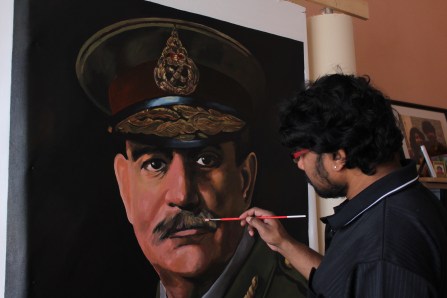
Sedunath painstakingly handpicked personalities, who made waves in the country, starting from the 1700s to late 1900s. Impervious to the effect she had on the viewers, Emily Kame Kngwarreye flaunts her lopsided smile and looks up from Sedunath’s canvas. This aboriginal painter was one of the most prominent contemporary Indigenous Australian artists in the world. Following her comes John Monash, who played a cardinal role during the First World War, with his commanding IMG_8024 (1)abilities. Sedunath doles out spaces for Patrick White and Elizabeth Blackburn equally, the Nobel prize winners in literature and medicine respectively and also paints Robert Menzies, a man who won prime minister post twice.
Sedunath, a full-time artist at Melbourne gained a newfound mojo in Australia, where he conducted multiple group shows.

I got a chance to participate in four group exhibitions in Melbourne, Australia. The first exhibition was conducted by Dandenong Art community for the ‘standing at the cross road’ award. I won the first prize from the 200 non-Indian participants. I am happy to be the first Indian who won this award,” says Sedunath.

Back in the day, when Sedunath was just Pradeep Prabhakar (his official name), he strived to carve a name in the Kerala’s art scene. Being a full-time artist in Kerala was never an easy task. He resigns to a brooding mood when asked about his struggling days in Kerala.

In Kerala, people don’t appreciate original art. They are looking for copies. I could not make my ends meet with just art. I had taken up a job as a graphic designer,” he recalls. He moved to Gujarat after his degree and in Baroda he found his destiny.

My brother was in Gujarat at the time when I went to Baroda. There I got a chance to paint Jain history in one of their temples. The priest who gave me the assignment spent a lot of time with me to narrate the wide history of Jainism. That is when the world looked up to notice me,” says Sedu. He was given the ‘Hemaprabhu Guru’ award for his massive work on Jain tradition done on oil paint. Later, he did his fine arts degree from the prestigious Baroda School of Art, where he gathered a broader perspective on life, the complex aspects of human society and more.

When asked what inspires his works he says, “The relationship between the nature and human beings is a recurring theme in my works. My works also explore the intricacies involved in religion and its interplay with society. Like all true artists I usedIMG_7543 to draw inspiration from tradition especially its parallel streams.”
Sedunath’s interests are not limited to just art. This multi-talented artist, who has a black-belt in Karate, also dabbles with literature and Carnatic music in his spare time. Sedunath has a novelette, Bhroonam, published in 2001 to his name as well.

Sedunath plans to delve deep into the rich artistic tradition of Australia and integrate it with his own during his stay in the country.
An Artist’s Journal

Bose Krishnamachari, Artist | Manu R Mavelil - The New Indian Express

Pic: Manu R Mavelil

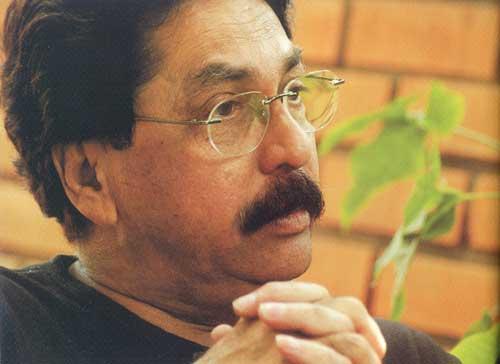
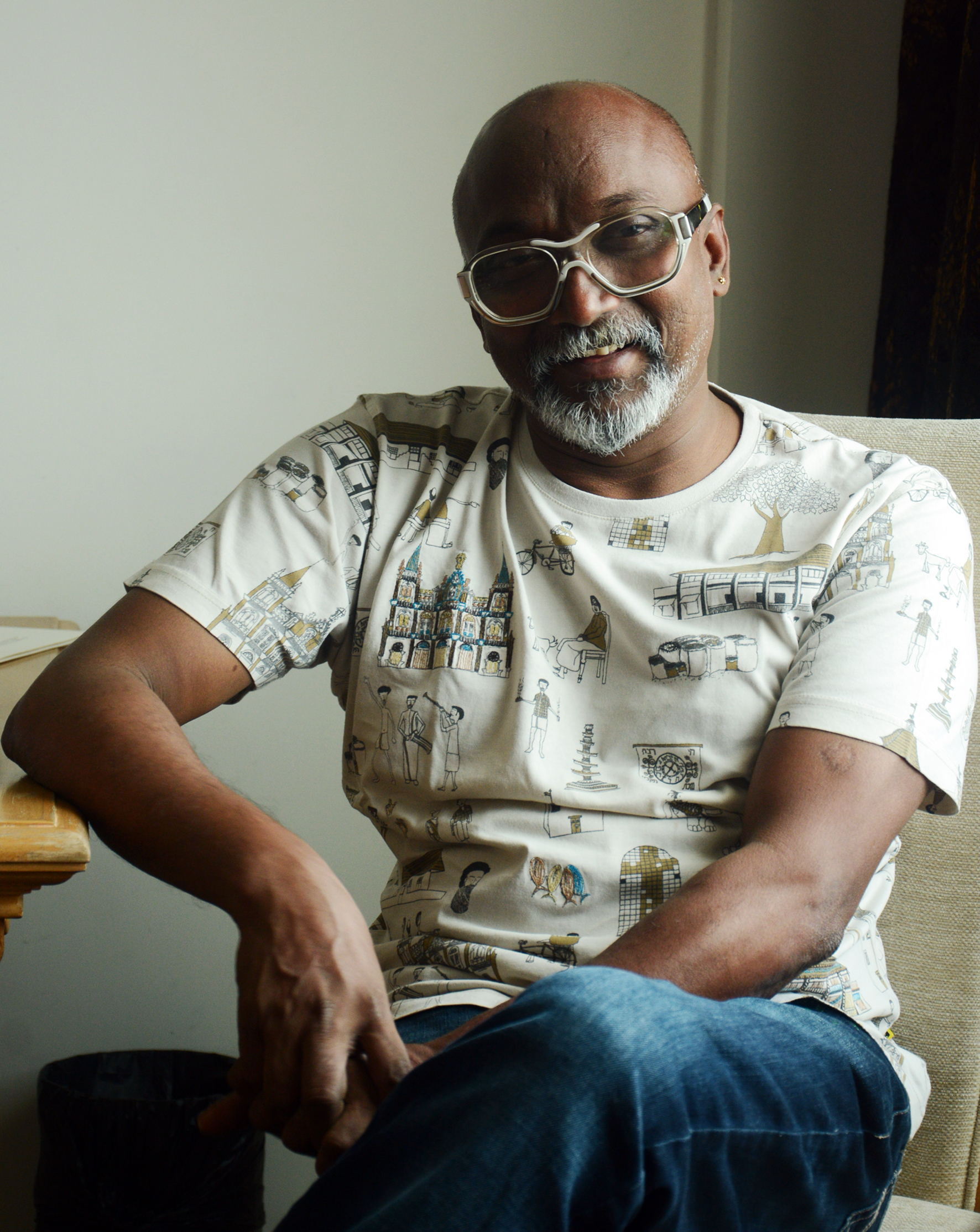
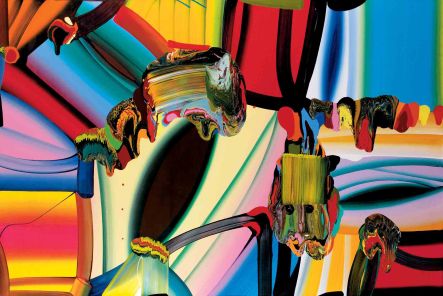
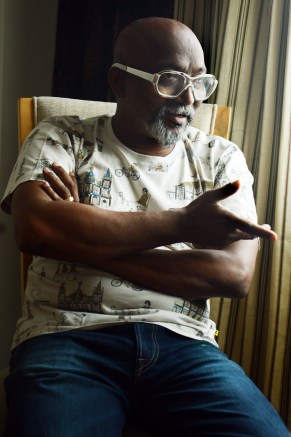
  Emerald socks peeking out from a pair of neon red canvas shoes are what catches your eye, the moment you enter Bose Krishnamachari’s suite. From his quirky custom-designed eye-glasses to his off-white t-shirt thronging with cartooned people and buildings, everything about Bose is refreshingly unique. The eccentric streaks that one would expect from an artist, however, do not come hopping about disrupting the flawless conversation we were having. Instead, the man who instigated Kochi-Muziris Biennale, along with his friend and contemporary Riyas Komu, and thence put Kochi’s name in the global map, unassumingly narrated his life-story – a quintessential rags-to-riches tale – for the City Express readers. Bose was in the city to give a talk about ‘contemporary visual art’ to the city’s art lovers.
“I am very happy with the response we received for Biennale. Recently KPMG, one of the largest professional services companies in the world had done a study on Biennale and it specifically shows how it has rejuvinated arts in Kochi and Kerala and benefited India’s art scene as a whole,” says Bose.
For the uninitiated, Bose is one of the most promising names in the Indian contemporary art for his innovative multimedia visual installations and abstract paintings. Today, his name resonates in the realms of Indian art, with the likes of Subodh Gupta and Anjolie Ela Menon. Bose brushes off his illustrious journey as nothing special. However, this artist, who was born to a simple carpenter in Mangattukara, has an amazing story to recall.
“My childhood dream was to become a doctor. Hence, I took science for my pre-degree. I was always good in drawing so teachers used to show my record book as an example to other students in the class. But my mind was set on medicine. In bose krishnamacharithe second year I had an unknown illness which started off as some kind of haemophilia but later on it became something else. I was in coma for a while. This turned my life topsy-turvy as I started imagining that I am having some terminal disease such as cancer. I was taken to doctors all across the state. This lasted for around six years. That is when I started doing theatre,” says Bose. Bose was named after Subhashchadra Bose by his uncle, who was a staunch nationalist. His father’s name Krishnan, which was Bose’s surname, later changed to Krishnamachari adding his father’s profession, asari (achari) to it.
“We used to translate plays of Samuel Beckett to Malayalam and perform before an audience for Rs 2,000. While I did the acting bit my younger brother directed the plays. The money had to be split between many. Still I cherish those days. It was one such day that I came across a magazine called ‘Sankramanam’, where I read about Kerala Kalapeedam,”quips Bose. Bose and his elder brother set about to Kalapeedam in Kochi.
“There I have met many eminent personalities from various walks of life like Adoor Gopalakrishnan and Balachandran Chullikkad. Kalapeedam gave me immense exposure. I have joined a course in Flash Art in Thrippunithura to learn art. But the tutor, whose name I don’t remember, was reluctant to impart his knowledge. He said I was not yet in a stage to learn from a book. I quit the institute soon after,” says Bose. Even though Bose forgot his name, Bose Krishnamachari is not a name that one would easily forget.
bose_krishnamachari_bose_krishnamachari_ne_en_1963_stretched-42-1In 1985, he received his very first award from the Kerala Lalitha Kala Akademi. That is when he decided to take art seriously. One of his friends from Mumbai told him to join Sir JJ School of Art, where he would get to learn the nuances of art world. He set about to Mumbai in 1985 and wrote the entrance test of Sir JJ School of Art. Bose could only get in the next year due to some internal regional politics. However, he not only passed out with flying colours from JJ but also conducted an exhibition in the college gallery while he was a still a student. “My exhibition was the very first of its kind as the college had never exhibited students’ works before. It had the biggest turnout due to my connections with the external world. I was quite inquisitive so I used to frequent galleries and meet artists. Thus I interacted with people like Akbar Padamsee, and Laxman Shrestha and even visited them at their homes. Padamsee’s house was an adda of filmmakers. There I also got to meet people like Kumar Sahni,” he says. However, Bose’s very first exhibition was held in Kerala Kalapeedom where his dreams took wings. Adoor Gopalakrishnan inaugurated the show there.
“In Kerala, the exhibitions are conducted as a formal affair. Mumbai, it’s more casual. We just invite our friends and share a drink that’s about it. Jehangir gallery still follows traditional ways just like our Vyloppilly or the likes. Otherwise Mumbai art scene is very informal,” says Bose. Bose who calls himself a ‘Mumbaikar’ says Mumbai was his university when he strutted towards the formidable world of art. Later this Angamaly boy who didn’t know a single word in English received scholarship to do MFA from Goldsmiths College, University of London.Bose Krishnamachari, Artist | Manu R Mavelil - The New Indian Express
After his share of globe-trotting and experiencing the global art scenario, Bose came back with the sole resolve to make a difference in Indian art. He has curated many shows like Bombay Boys with his Mumbai Malayali artist friends like Riyas Komu and TV Santhosh. Biennale was, in some ways, an extension of that friendship.
“One day while I was at my home in Mumbai. The then cultural Minister of Kerala, MA Baby paid me a visit. When he came down I have invited my Malayali artist friends in Mumbai. He said he wants to conduct a show for children’s charity and we all said we do that on a daily basis. We donate many of our works for a good cause. So in between discussions the idea of biennale had come up. That is how biennale transpired,” says Bose. About the criticisms he had to face Bose says,
“I never imagined that we would be facing wrath from our own friends. We never exploited anything so I have no anger towards anybody. We had always held steadfast to the belief that we were, in some ways, propagating a platform for social change and maybe sooner than we realise art will be our last resort to unify a divided nation and people”. The biennale team is in full swing with their preparations for the second editon of Kochi-Muziris Biennale scheduled to open on December 12th of this year.

A Brief Japanese Encounter

Toshiaki Ruike, an artist from Japan|Manu R Mavelil - The New Indian Express

Pic: Manu R Mavelil

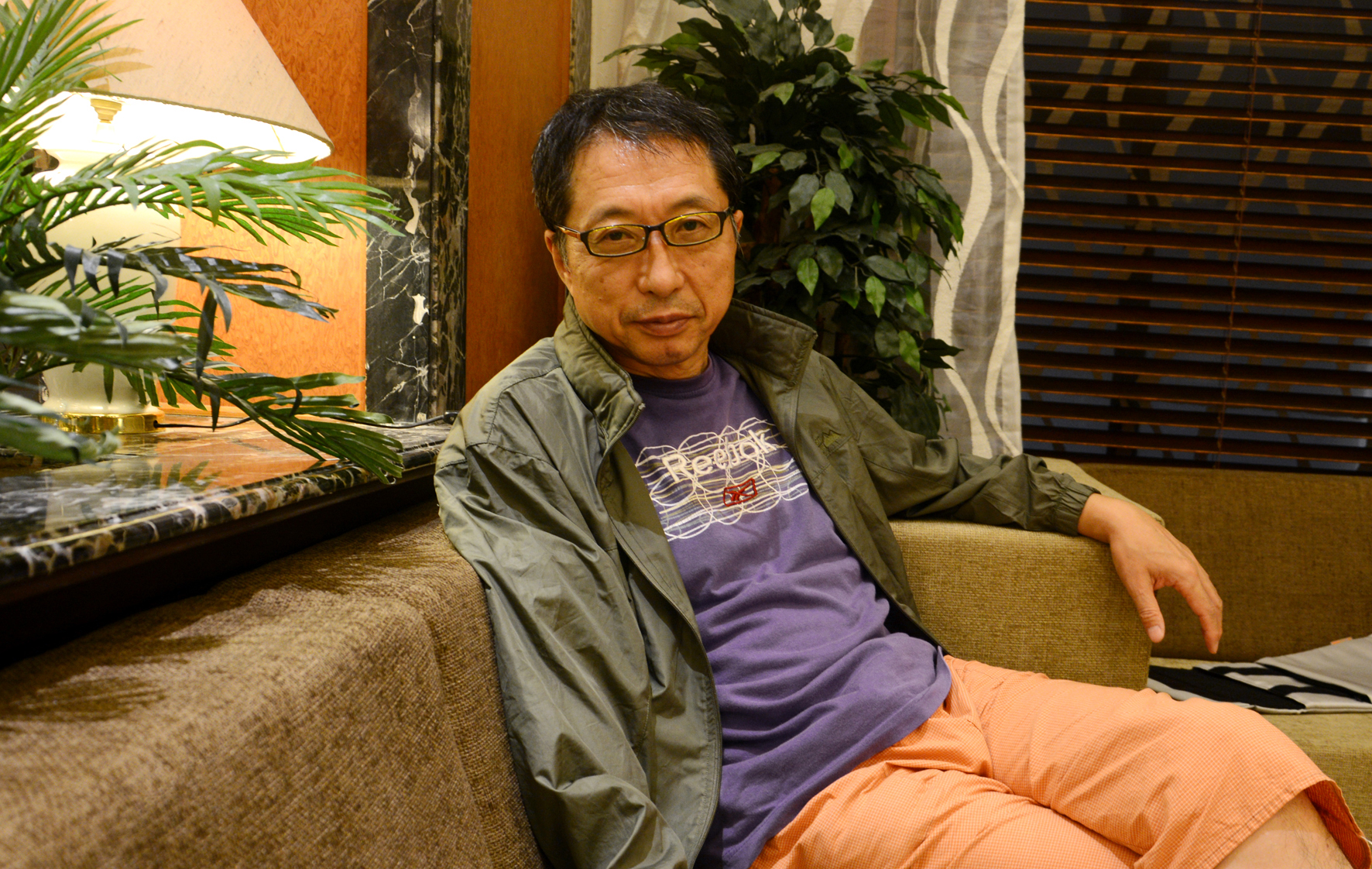
  His almond-shaped-eyes shrink with pleasure whenever one mentions India or Indians. A slew of lines appear out of nowhere whenever he flaunts that adorable smile of his. Toshiaki Ruike, a Project Manager of TEC International, who moonlights as an artist or writer, is in the city to give his inputs on the Japanese Drinking Water project, which is underway for more than a decade. With the same deadpan expression with which he quipped Indians are much friendlier than Japanese, he offers a bag of fruits denoting Japanese do not meet people with an empty hand. And your empty hands twitch with embarrassment. But, the maverick in Ruike does not seem to mind, for this is not the first time he has been to India.

With his broken English he says, “I came to Kerala ten years ago to kick-start the Japanese drinking water project but the project does not seem to progress as fast as we hoped. But I got a chance to travel in and around the country. I have conducted a few exhibitions in Thiruvananthapuram, Hyderabad and New Delhi,” says Ruike, who is an _0708-1Iranian eyeengineer by profession.
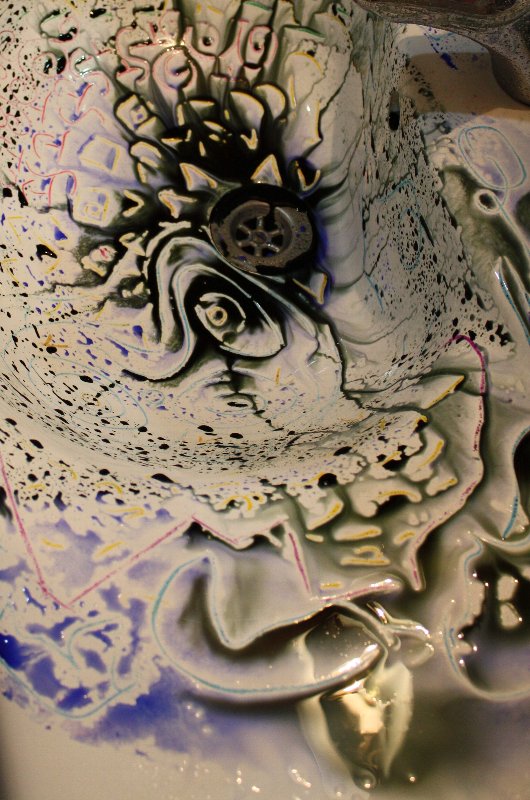
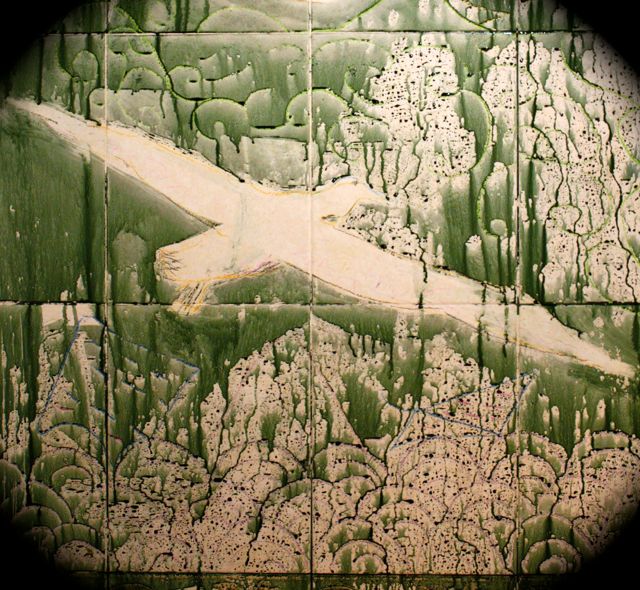
Unlike other artists, Ruike does not prefer to paint on paper or canvas. It is the tiled walls of hotel-room bathrooms that serve as his canvas. With Japanese Ink and oil pastels this artist creates spellbinding oeuvres of which he takes digital photographs. Once it is digitally imprinted he does not forget to wipe it off from the walls. Ask him why bathrooms and he says matter-of-factly, “I was literally living out of bags those days. So carrying around multiple canvases or papers would have been quite difficult. Today, because of my hectic schedules I don’t even get to paint on walls.”

Aomori, Japan, might be home to this soft-spoken man, but he keeps a special place in his heart for the vibrant wonder that is India. Once, the initial cultural shock worn off Ruike secretly started admiring the unconditional warmth the country exuded towards any one who crosses its borders.

Japanese do not have as many dance forms as you guys do. The costumes, the colours, the dances at weddings, everything about India is rich with colours. Even the traditional artforms are quite enjoyable,” he says.

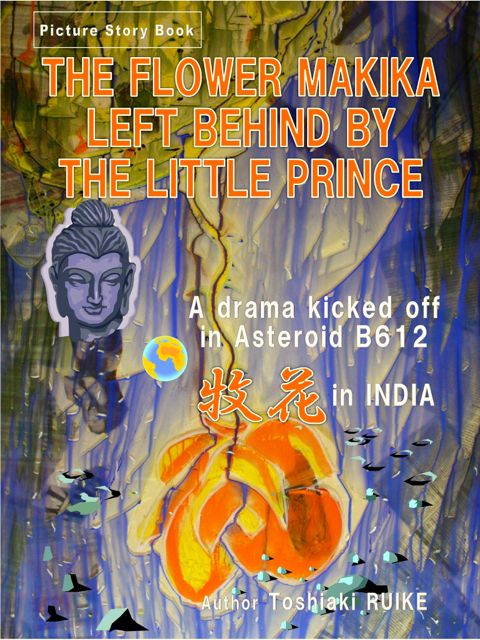
Ruike, who found solace in Yoga from India, had written three ebooks on Yoga in Japanese, which were published by Amazon. The latest from his kitty is a picture book, ‘The Flower Makika Left Behind by the Little Prince’. Antoine de Saint-Exupéry’s most cherished work ‘Little Prince’ is being revisited in Ruike’s book. He elaborates on the flower Makika that bloomed in Asteroid B612 in the book. Ruike makes it point to use his own illustrations in blog-e381a8e3828a_0617-1daruma-for-dreamingall his books.

I am currently trying to translate Makika into English. As my English is not that good I am struggling a bit,” says Ruike with a smile. His interests do not stop at literature or art, he often finds time to produce videos on subjects that pique his intrigue and upload them in YouTube. It could be people, places and paintings.

In 2011, when the tsunami and earthquake hit the shores of Japan, Ruike’s parents lost their ancestral home in Aomori. Ruike saw to it that they were safely reinstated in a new home in Tokyo. In Japan, where natural disasters are as common as road accidents in India, he takes all the traumas he had endured in his stride.

Ruike, who is 60-years-old now, has many dreams to pursue once he’s retired.

Today, my days are filled with work, work and more work. I want to be a full-time artist or writer once I am retired. In Japan, 65 is the maximum retirement age. I have tried to become a full-time artist in Japan but the people in there do not seem to admire my art. So I had to return to my old job,” says Ruike.

blog-the-flower-makika-cover1Ruike’s youngest son, who did his MBA from the Delhi University is currently working with a Japanese company and his daughter is married and settled in Tokyo. He will return to Japan after his one month stint at Amritsar where he has to overlook the work being conducted by his company.

I will be back to Kerala as soon as I can. I just love this place,” Ruike signs off with a lasting sayonara

Strokes of melancholy

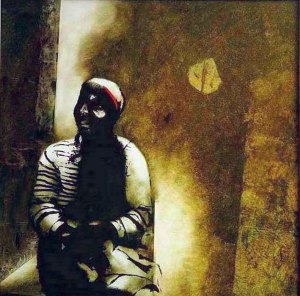
 yusuf-arakkalThere stood a six-year-old boy, orphaned in an unfair world, soaked in melancholy, awaiting his long-lost loved ones, beside the seashore. The grand ancestral home, that adopted him as their own, had wiped away his tears. Nevertheless, at heart, he counted himself an orphan. Yusuf Arakkal, the current Raja Ravi Varma Puraskaram winner  and one of the most prolific artists in India today, says, it is the agony that he hid behind a brave face from the time he lost both his parents, what makes his strokes black and brown rather than yellow or red.

Yusuf has been a very active youngster, with a bit of football and art as companions. His strokes held maturity even during his earlier days. The anguish-filled paintings soon gained attention, and he set about to pursue art. His decision did not bring positive reactions from his family, who wanted young Yusuf to be a doctor, engineer or at least a lawyer.

“I had ran away from home at the age of seventeen to Bangalore. All I wanted was to become an artist. Without any money at hand, I had to do all kinds of small-time jobs, except cleaning toilets. It was the most struggling days of my life and I revisit those days in my paintings,” he says.

Yusuf-Arakkal (1)The solitude series which portrays man in his weakest of moments contemplating, nursing his mental wounds, all battered and torn, is a representation of the artist’s own agony. Similarly, every painting of Yusuf has some story or other to narrate to the viewers. His reading habit is what led him to do a series on books, which has inspirations from Chinese sculptures to K C S Panicker. After visiting Vaikom Muhammed Basheer at  his home, Yusuf had come up with the idea of a series on Basheer and his works. Though it  materialised only after Basheer’s death, many still consider those as his best of works.
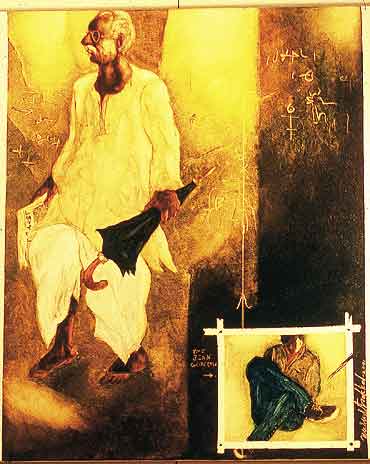
Except a distant relative of his, who was a portrait artist, Yusuf has no trace of art in his family. Yet, he conquered Bangalore art world within no time and even garnered awards from all over the world. Yusuf’s artworks delineate working class, literary works and even day-to-day apparels. The  chiaroscuro effect or the Rembrandt influence that he calls it, is prevalent in almost all his works.

“I wouldn’t call it chiaroscuro, as Rembrandt’s paintings do not have such dramatic light-and-shade effects, instead he subtly used it in his favour,” says Yusuf.yusef-arakkal-generation-gap-o.c-2001

The brown and black palette is often brightened with a manoeuvre of red strokes in between, he calls it a touch of light or a relief to his dark shades. “My artworks come from my experience, whether it is literary works, sculpture art or paintings, one cannot bring in feelings without actually experiencing it,” says Yusuf.

He has received plaudits from all over the world; however, he considers Raja Ravi Varma Puraskaram his best, “I am considered a good artist wherever I go, but at home my wife doesn’t see me like that, I am just a husband for her, likewise, getting something as big as Ravi Varma Puraskaram from your own land is something you would cherish always,” says Yusuf.

Yusuf, who had studied art at Karnataka Chithrakala Parishat, says, “A formal education is not compulsory for an artist. An artist do not need any qualification to express his art. But the technical know-how of the craft is necessary, for that education does help”. Destiny played in favour of Yusuf, as it was Jaya Varma, a relative of Raja Ravi Varma, and a graduate from Royal College of Art, London, who first taught the lessons of art to him. Yusuf studiously learned European Academic portrait painting for one-and-a-half years, under Jaya.

Yusuf is conducting an exhibition of his paintings which has pieces from his series, book, solitude and apparel at Durbar Hall, Kochi, to commemorate his winning the Ravi Varma award

A life offered to art (Aug 2013)

  uprecentWhat would a tenth-grade rank-holder, the then talk of the town, do for a living when she grows up? Test her curing skills or break a computer code? When young Parvathi Nayar revealed her dream to be an artist to the school principal all hell broke loose. Between lashes of protests, her parents stood by her and welcomed her decision with both hands. Today, when her name resonates in the realms of Indian art world, Parvathi smiles humbly.

Being a part of Jaya Bachchan’s list of 70 best Indian artists to the Indian Government’s preferred painter for Mumbai International Airport, this woman of substance has been there and done it all.

Having a repertoire as impressive as any other big name in Indian art scenario, this Chennai-based Malayali artist has much to boast off. On her visit to the capital city Parvathi spares some time for the City Express.

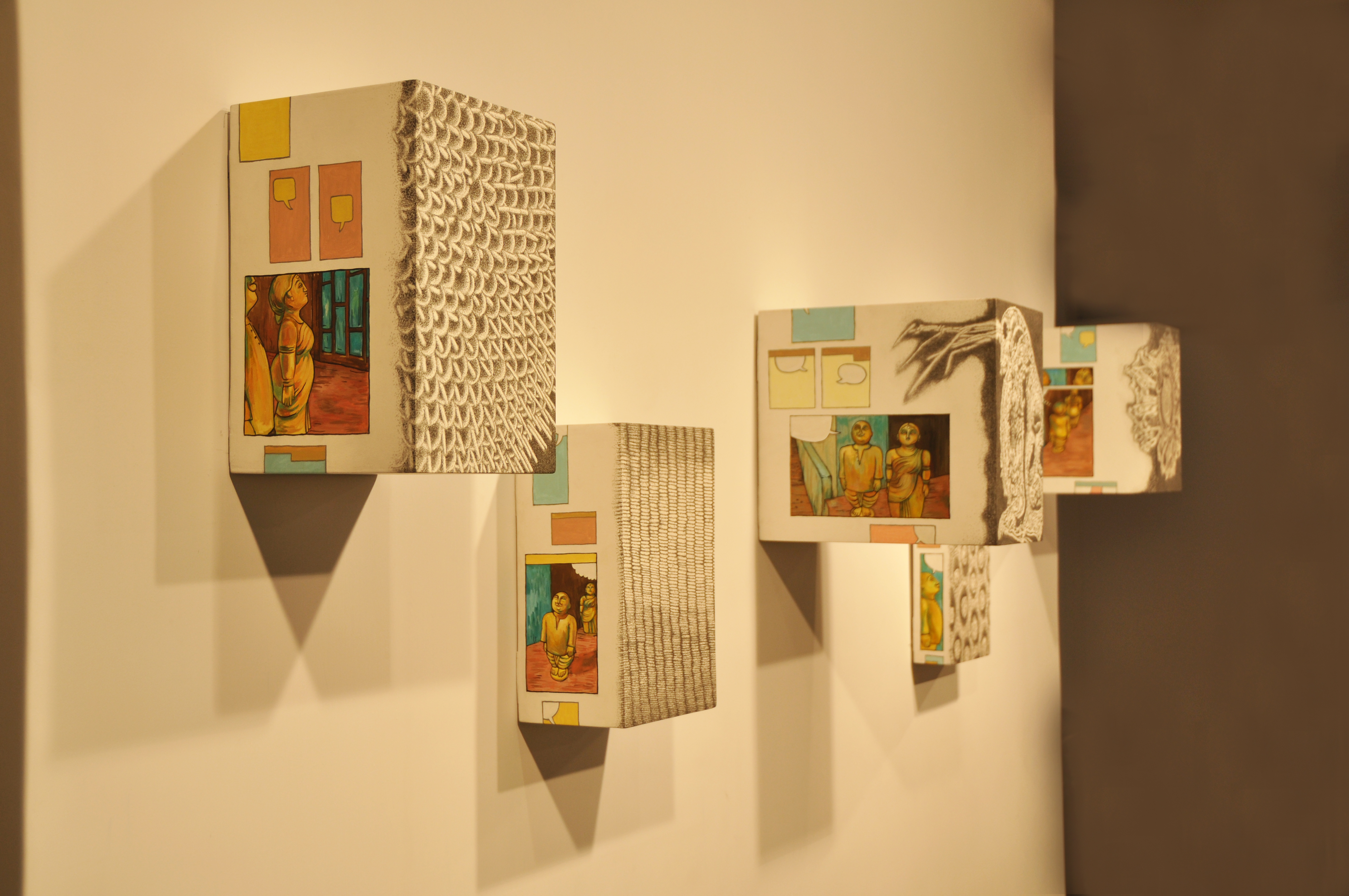
“I have always drawn and painted, I suppose a child would always draw and paint but for me it was like finding myself. My mother was a painter, so the drawing materials such a charcoal and brushes were always available. Hence, I started with those at first,” Parvathi reminisces. Rasa- Nine Links

From those vibrant brush strokes that aided her in forming her individual style, Parvathi has come a long way. Today, her love for detailing which was persistently there ever since she commenced her artistic journey, has made her abandon lines and colours to find solace in pencil dots. It is with those pencil dots, she has created magic on humongous canvases that could narrate volumes in a glance.

“When you put a lot of detail together it tells a story.  Like in literature, sometimes it is very descriptive that it delves deep into people’s psychology. But it is not the end in itself. For me, the detailing is a visual hook. It draws you in but then I am hoping you will see something larger beyond that,” Parvathi elucidates.

Parvathi’s works, be it the forensic cinema or the win lose draw series have similar qualities that prod human minds with unanswered questions. With intricate contours of pencil dots she unfastens the myriad facets of world and lets the viewer indulge in its complexities.

The poignant voids between the black dots are her protagonists. In her forensic cinema series, on wooden panels she freezes Raj Kapoor and Nargis in their Awara avatars and enmeshes the fast moving imagery of cinema with the mating of sperm and egg.

In that mélange of love and life, she captures the essence of forbidden love while beautifully depicting a sperm’s journey to meet with its counterpart.

But within all its unfathomable yet vocal obscurities of her cinema series, she tries to converse with the common man through hilarious English subtitles that accompany regional language films.

vrana2A stern and sober Raj Kapoor pronouncing ‘I am no gentleman, savage” would bring a smile to anybody’s face.

“The English subtitles for Indian films are quite interesting. When you do word-by-word translation, instead of meaning the same thing there is a big chance that whatever the actor wanted to convey becomes hilarious. Like the one or two I have given in the Forensic Cinema and my Tamil cinema series,” says Parvathi.

While the forensic and bones series deal with the body and its intricacies in minute details, location| locality series tries to locate our existence in our own body while interconnecting it with pathways and maps.

After receiving her Masters in Fine Arts from Central St Martins College of Art and Design, London, on a Chevening scholarship from the British government in 2004, Parvathi has gained a renewed confidence that took her to places.

Being the only Indian artist to present an installation of drawings at ArtSingapore, Singapore’s national art fair to having her works collected by institutions such as the Singapore Art Museum, The Sotheby’s Art Institute and Deutsche Bank, Parvathi’s achievements in the art field is immense.then and now 2

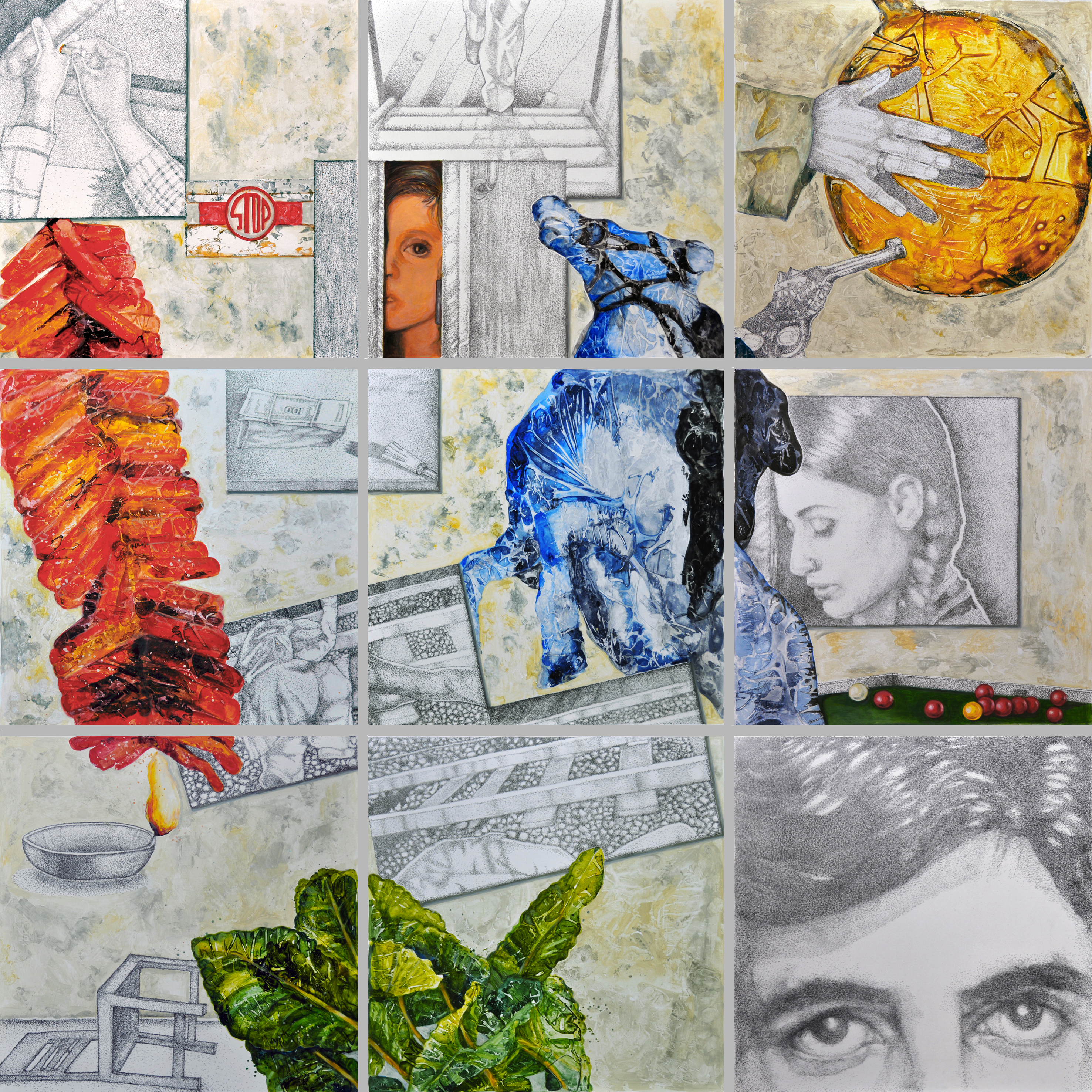
She was among the seventy Indian artists including Anjolie Ela Menon, Akbar Padamsee, Badri Narayan and Satish Gujral selected by Jaya Bachchan to celebrate Amitab Bachchan’s 70th birthday by presenting him with 70 paintings. In her painting Rasa,  panelling nine parts of Amitabh’s film Zanjeer which had him in his ‘angry youngman’ persona for the first time, she captures the most memorable moments of Bachchan’s performances in black and white and eases them out with a hint of crimson and jade here and there.

With a lighted fire cracker or sheer simplicity of a shrub, which stands apart from the pencil dot backdrop, Parvathi brings in fresh socio-cultural dimensions to the work. In Parvathi’s works the world achieves more vicinity in its details.

However, the abstract-like quality to it disappears once the work piques you in.

“Say with the forensic work, a lot of people approach it like, oh my god she did it all by herself and it’s so much work, so much detail and then they think it is an abstract.  Once that draws you in, you realise there was something more to it. There’s a narrative, there’s a story, that it is looking at the body, life and the world in a different way,” quips Parvathi.

Parvathi-Nayar-1Parvathi says in order to survive in today’s art world one should constantly negotiate what is decorative, art and craft. And shape oneself accordingly.

When she looks at her love for detail, Parvathi also feels that she is very Indian at heart. “So there is that Indian impulse, even if it is the mehendi on your hand, the sari weaves, the designing quality about all of it is always there,” she says.

About her daughter she says, “I really feel she is rewarding me rather than me rewarding her. It is really enriching as it is fulfilling in both ways for the child as well as me.

Parvathi’s love for her homeland is evident when she says she would love to do a series on Kerala streets sometime. She is waiting to capture the beauty of god’s own country with a camera to create something wonderful with it.