
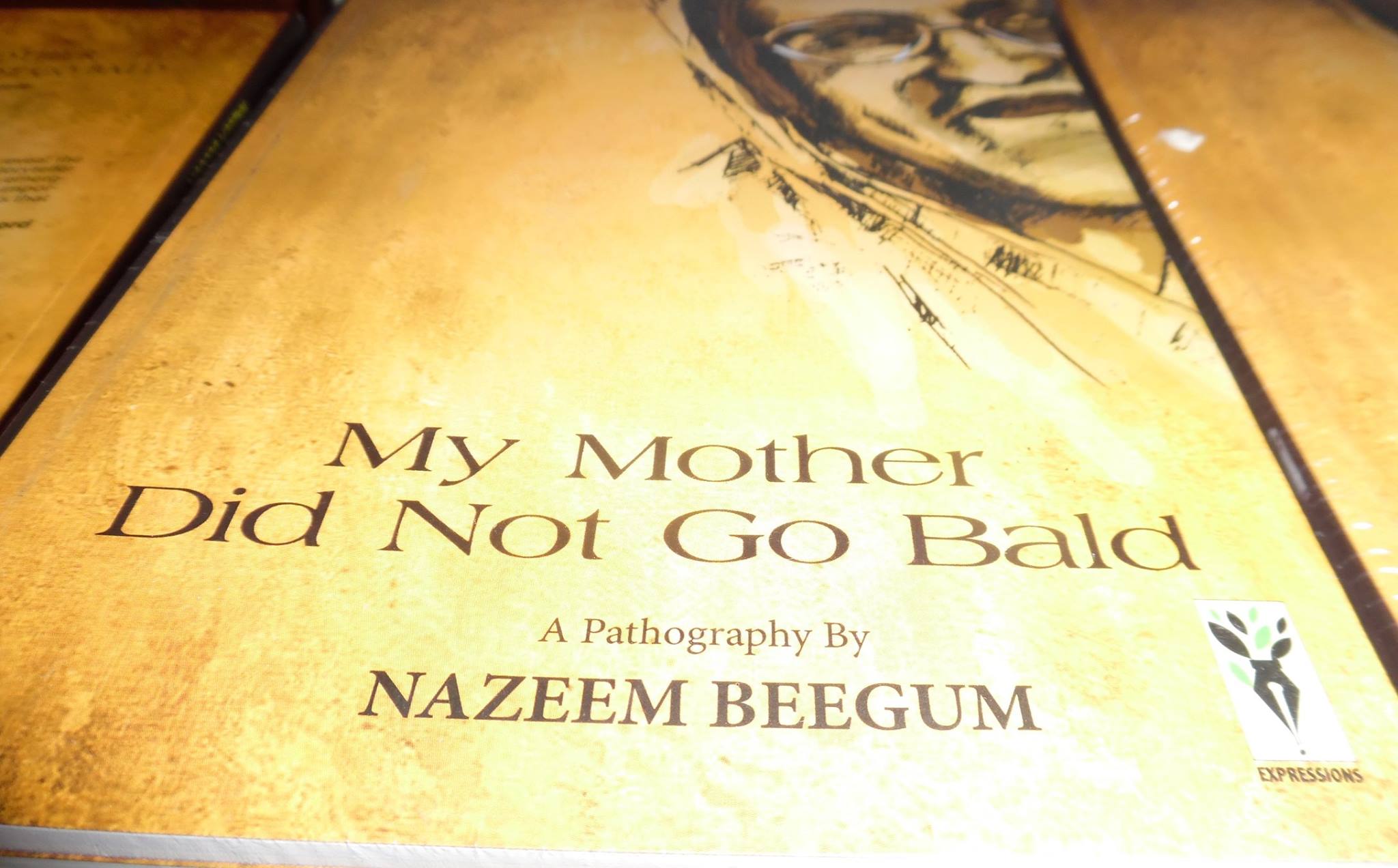
 All through her exacting journey of watching her mother, Sainaba, succumb to cancer, Nazeem Beegum was just a bystander. A bystander, whose silent agonies went in vain before the persecuting and prejudiced health system of the state. Nazeem, an expatriate journalist, who spent her days and nights tending for her beloved mother, could not come to terms with the callous reception from most major medical institutions in the state. But, they found solace at the doorstep of Pallium India, where she met the gentle visionary, Dr Rajagopal. It was by Dr Rajagopal’s insistence that Nazeem began to pen down the dark yet essential events that happened in her life after her mother had fallen ill. Nazeem’s pathography ‘My Mother did not go Bald’ is making the right noises in the literary world within a few days of its release. Nazeem would be donating all the money she may earn from the book to Pallium India.
“I started writing the book right after my mother’s demise. Even though there were long gaps in between each chapters, it only took me one year to complete the book. Once completed I got an overwhelming response from many renowned people like NRS Babu. Babu sir’s response was the green signal to go ahead with the publishing,” Nazeem recalls.
Sickened by the stoic attitude of medical institutions, Nazeem went into a writing spree on social platforms once her mother left her. Through her crypt and candid posts she warned the world about the wolves lurking beneath the white uniforms, often asking the medical practitioners to introspect on their acts.
The chapter names ‘Bystander 1 to Bystander 21’ is well-justified in the first chapter. Nazeem, who became a participant of her mother’s pains, worried sick for her well-being, was just a bystander in the eyes of the hospital. She accepts the term with reluctance. Nazeem’s narrations strike a chord with those who go from 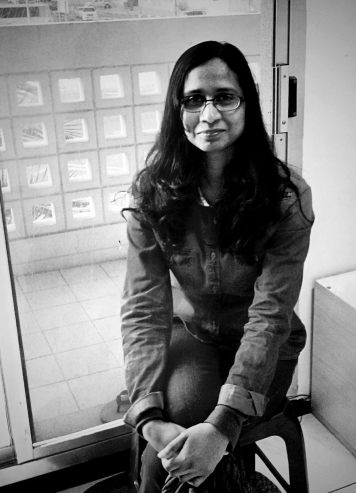 being shell-shocked to numb in the matter of days, when a terminal disease hits their loved ones. There are mentions of her own family members being rigid and unresponsive during the trauma. Ask her what their reactions were when they saw the book and she says they were mixed. “I have got both positive and negative feedbacks from the family. But by the end of the day they all accepted it as writer’s freedom and I am grateful to them for that,” says Nazeem.
Nazeem’s intense research on finding an alternative medicine for Sainaba, who insisted on never going under the knife, took her to the doorsteps of Pallium India. By then, they had lost faith in every other method from Siddha Vaidya to Allopathy. Nazeem, who believed palliative care is nothing more than serving free morphine, could see the wide range of philanthropy happening under Rajagopal.
Nazeem, who describes her mother as careless and inexpressive compared to the doting mothers in the neighbourhood while she was growing up, becomes highly protective of her in the years that follwed. Sainaba had lived a full-life with her loving husband in Malaysia until she was widowed at the age of 38, with 7 children to look after. But later, she who saved a large chunk of her heart for her only son, had to bear the brunt of his anger. He refused to pay her a visit even in her deathbed.
Sainaba, who preferred to suffer in silence, didn’t even let her children know about the taunting pangs on her stomach. But she had been giving them indications of her impending death. She had gallbladder cancer and nobody came to know about it until it surpassed its fourth stage. Her expatriate children took her to UAE to stay with them but they found her health deteriorating day by day. Nazeem, had to send her back to the comfort of her home in Kerala.
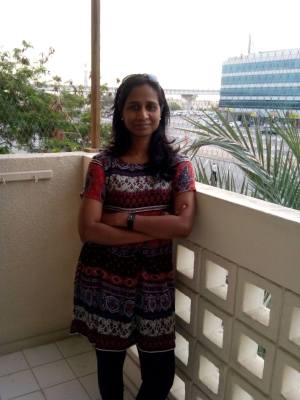 Sainaba’s long and curly hair bore no traces of her age until her untimely death in 2013. When she stayed with her children in UAE, she asked them to buy her a hair cream. Nazeem who found her sudden interest in haircream amusing, later regrets her words. All cancer patients who undergo chemotherapy have to shave off their hair. But Sainaba, who was in an advanced stage, was not even suggested chemo. Hence, Nazeem’s mother never went bald. Even in her delirious state she had her long beautiful hair haloing her. Through soul-stirring connotations and heartfelt confessions, Nazeem makes ‘My Mother did not Go Bald’ a compelling read.
When mentioned how people are going berserk over her book, Nazeem says, “Many publishing companies had said English books would not get the same reception as Malayalam. I am proud that the sales graph of my book says a different story,” says Nazeem.
 An Insomniac's Musings