Dancing the Dream

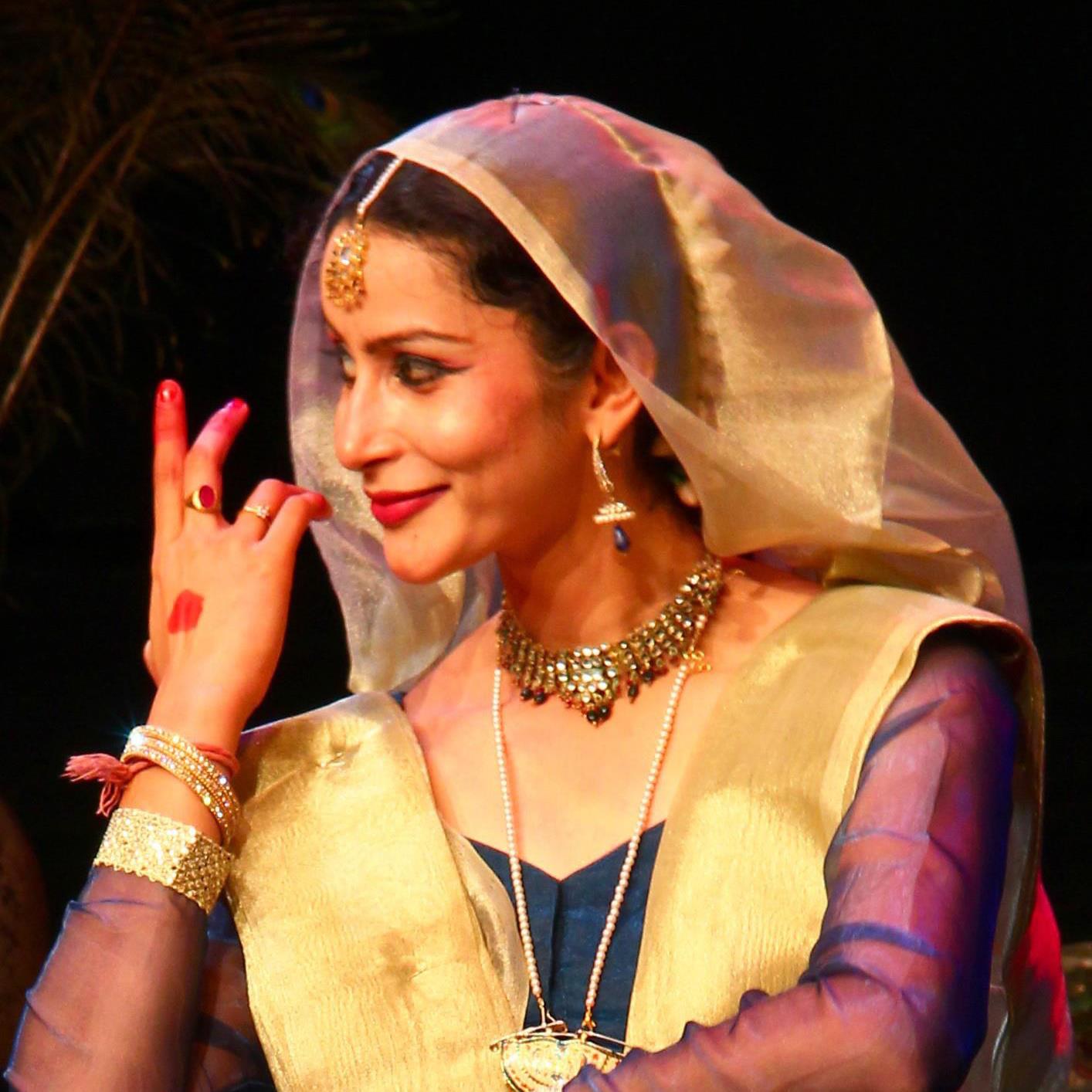
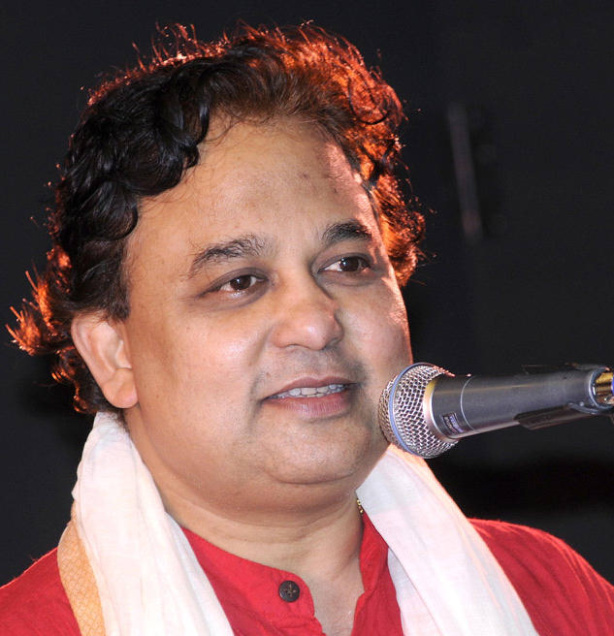
Jayant Kastuar 1  Jayant Kastuar lets his dance do all the talking. Mesmerising the world with his delicate hand gestures, seamless spins and intricate footworks, this maestro imbibes the sheer beauty of Kathak with elan. Sashaying from one stance to another in gay abandon, Jayant’s fluid motions, kaleidoscopic at times, bring out the intrinsic ease of Kathak before the audience. This acclaimed dancer, who had clinched myriad national and international plaudits over the years spares some time for the City Express on his visit to the capital city.

“Kathak is not only about the ‘Nritya’ and the footworks involved with it, ‘Abhinaya’ (acting) is also as important. When one venture into Kathak, he should also take into mind that it is also his first step towards spirtiual enlightenment,” says Jayant, who was touted as a dance prodigy in the 1960s.

Hailing from Jamshedpur, a melting pot of various cultures and traditions, Jayant’s entry into the art world was predestined. Jayant was the tenth and the youngest child of his parents, who inculcated rich traditions and love for art in their children.

“I must have started dancing the day I was born. Because I was born into a very culturally-rich family where everybody was learning one artform or the other. My mother was the daughter of a prominent leader from Bihar. She belonged to a family jayant_kastuar_dancerof social leaders and my father was a Zamindar. My mother could do all the ‘yogasanas’ until the day she died. So they were quite particular about their children learning an artform. When my sisters learnt Odissi I was pulled into Kathak,” says Jayant, who first performed before an audience at the age of two. It was his rendezvous with the legend Pandit Durgalal, while he was still very young that turned Jayant’s life upside down.
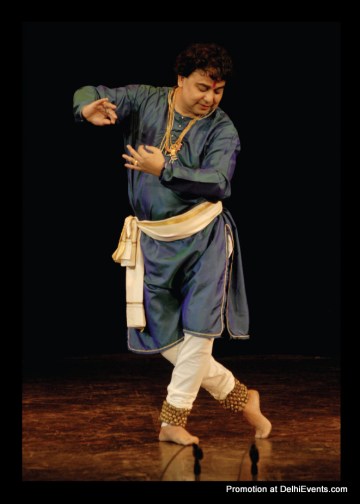
“I had the rare opportunity to learn from Pandit Durgalal and I consider it my biggest blessing,” says Jayant. Jayant, who follows the Jaipur Gharana, is often known for his authentic presentation of his Guru’s methods before the audience. However, he has developed a unique style that accentuates abhinaya while doing other Kathak nuances.

Unlike other dedicated artists, whose academics rarely match up to their stage persona, this dancer who studied history from the St Stephen’s college secured top scores during his post graduate studies. Later on, he did doctoral studies in Buddhist art. This quality, could have been the reason why he was sneaked away from the college to serve as the head of the dance department at Sangeet Natak Akademi, National Academy of Performing Arts, when he was barely 29. Later in 1999, he was promoted as the Secretary of the Akademi, where he served for another 12 years.

“The Akademi duties were taking away the time I should have invested on my dance. I was not able to perform at the Akademi conducted functions fearing the criticism that the secretary himself is performing at all the events. So in 2011, I resigned from the post,” says Jayant, who has been conferred with national and international honours such as Nritya Choodamani, Natya Padmam, Nritya Shiromani, and a felicitation from New York city council.

When asked dance was commonly perceived as a woman’s art, he says, that is a misconception as all our Natyacharyas (Dance teachers) including Nattuvar and Nataraja are men. “Look at Kathakali for instance, even the female roles are played by men even today. Kathak has been a male art to begin with, especially in Rajasthan from where the Jaipur Gharana comes from,” says Jayant.
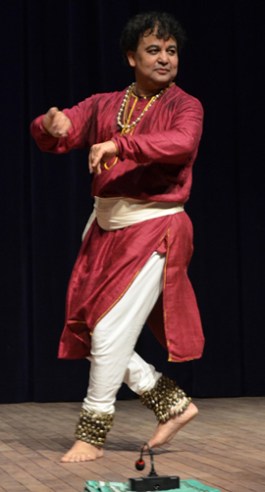
p5aHe feels current climate is quite favourable for dance as media and the reality shows give it enough popularity. However, he feels that dance should find the right balance without falling prey to commercialism.

“Just like the Britishers, America is also trying to colonise third world countries with an overdose of American programmes. By showing their second grade movies and TV programmes they are inculcating violence in our children. That is something one should be aware of,” says Jayant.

He leaves us speechless with his knowledge of indigenous Kerala art forms, Koodiyattom, Nangyarkooth and Kathakali. His observations are bang on, easily revealing his profound sense of awareness about dance, his sole passion.
Dance is My Language

10294983_713919905321677_3204630223904816406_o

Pic: Kaviyoor Santhosh

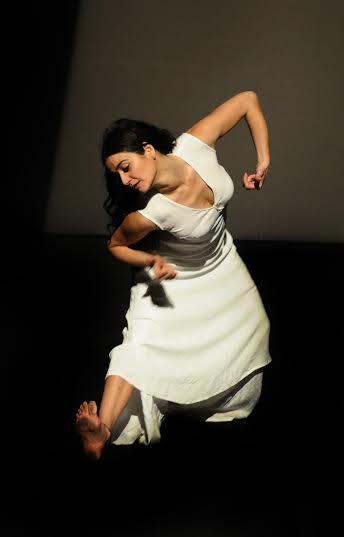
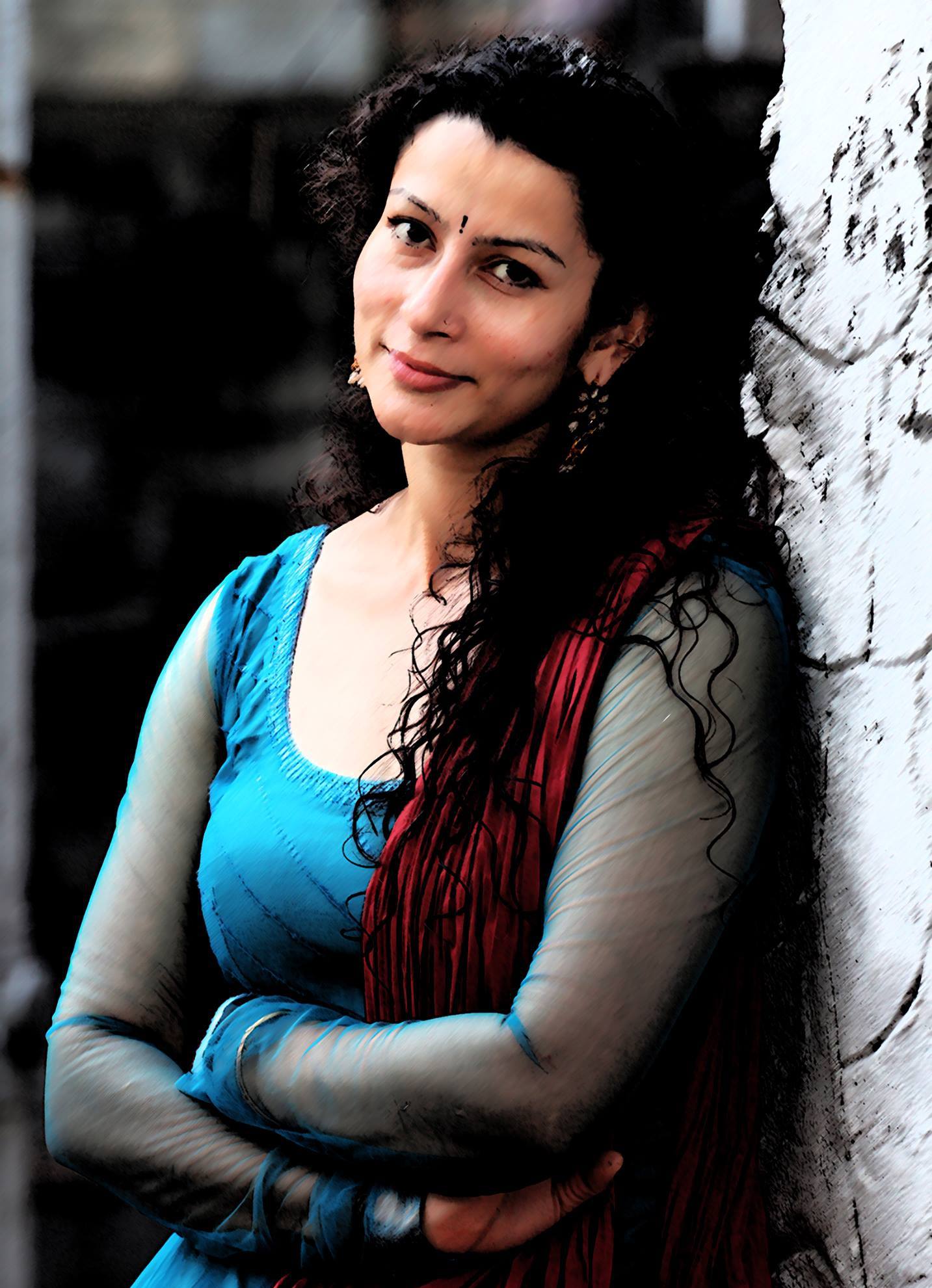
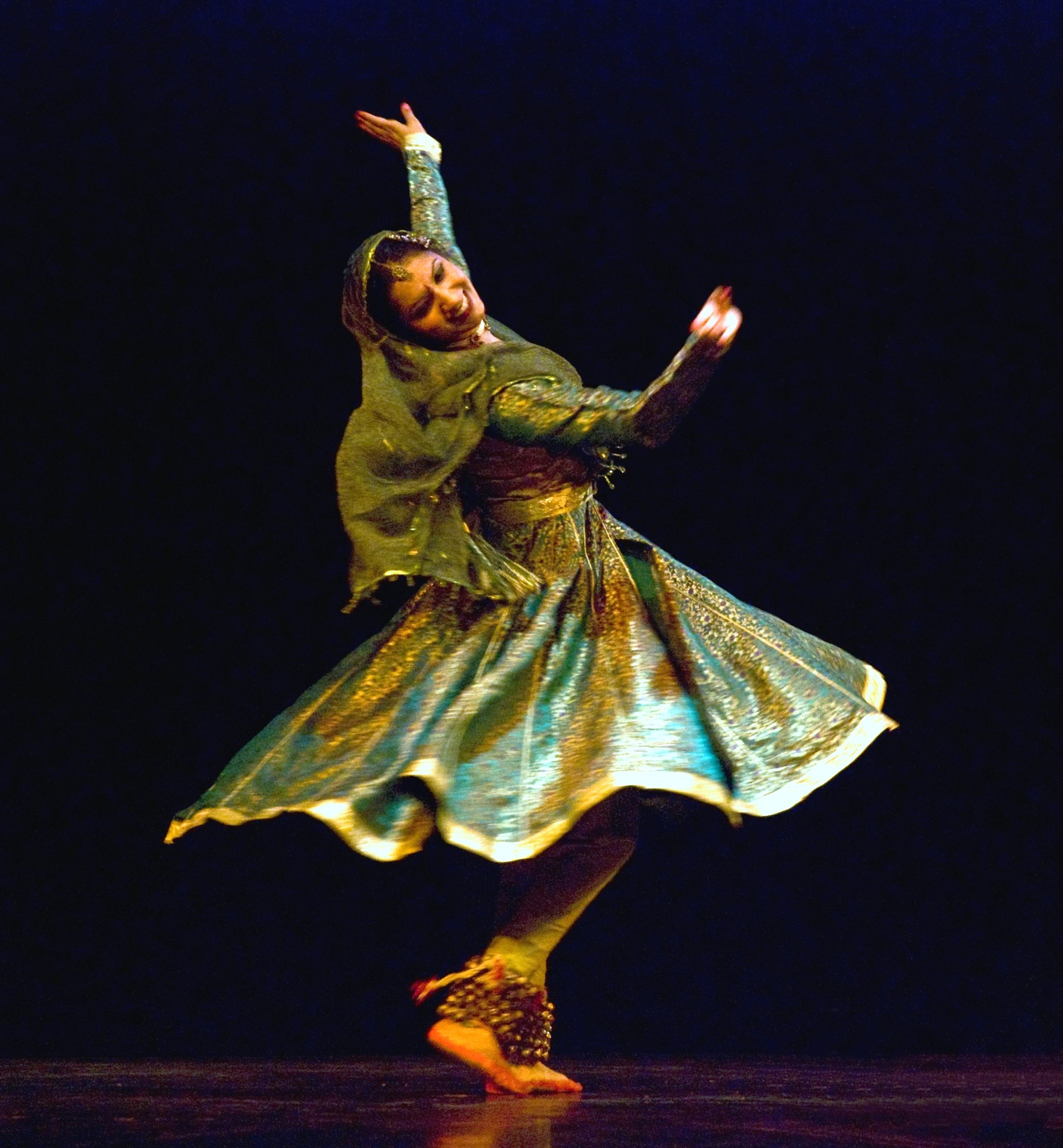
On stage she exudes the poise of an enchantress, whose fluid motions and divine stances could sway you away on a fantastical ride, but in person she is the epitome of humility. When dancers are known for their haughty tantrums, her friendly demeanour may even come as a pleasant surprise. Slender, tall and all of 28, Manisha Gulyani, a versatile Kathak dancer with a solid body of work to her credit, talks about her undying passion for dance.

“I can express myself better through dance. So I feel that Manisha is dance. It is a passion that started at a very young age so dance has been a part of my life ever since I could remember,” says Manisha.

Manisha, the current head of Amity School of Performing Arts, Rajasthan, is in the city to facilitate a dance workshop conducted by Noopura Institute of Classical Dance and Music for dance lovers.

It was her father who ushered her into dancing at the age of seven. Easily swooned by the spectacular dancing world introduced to her at a tender age, Manisha put her heart and soul into dancing.

“My father understood that I was artistically inclined from a very young age. We didn’t have any music or dance background, yet he felt that I had it in me. He took me to Jaipur Kathak Kendra, where I have learnt the basics of Jaipur Gharana from Rajkumar Javda, who was one of the senior Gurus of the institute,” quips Manisha. Manisha was always praised for her perfect footworks and rhythmic nuances by her Guru at the Kathak Kendra, which prompted her to tone up her skills and excel in her art. But it was her rendezvous with Pt. Girdhari Maharaj, a world renowned Kathak exponent that changed Manisha’s life forever. Seeing Manisha’s craft Pt. Girdhari Maharaj took her under his wings and made her his disciple instantly. She learnt the intricacies of Jaipur Gharana Kathak under him.Kathak_3511900193_986f6440f6_b_retouched

“When Pt. Girdhari Maharaj made me his disciple I realised that I didn’t want to do anything else but dance. Since then I have disregarded all my other studies and concentrated on dance. I have done my MA in dance,” Manisha recounts. She is also learning Hindustani rhythms under the tutelage of renowned Hindustani musician Pt. Udai Mazumdar.

This danceuse was showered with myriad accolades including Ministry of HRD’s junior scholarship, Ministry of Culture’s senior scholarship and Jaipur Kathak Kendra’s merit scholarship. She has also earned the title of ‘Nritya Nipun’ from Bhatkhande Sangeet Vidyapeeth.

Manisha who has been predominantly following Jaipur Gharana style, is on an experimenting spree these days. She is trying to find the feminine aspects of Jaipur Gharana, a male-oriented Kathak school derived from Tandav (Lord Shiva’s dance), and is working on a piece with the feminine compositions. She has recently dabbled with sufi and Darwish dance and adapted their style into Kathak dancing.

“I have incorporated almost all the Sufi poetry written by the Sufi Sants in Indian classical music and designed a Kathak piece by integrating Darwish dance movements. It has come out beautifully. The audience loved it. The presentation of dance is transforming day-by-day so we have to move with the flow. I love the contemporary movements that come into the artform and I want to be a part of it,” says Manisha.

736361_487936744586662_1505831225_oAccording to her Kathak is a two-dimensional artform that needs constant updating. Though she belongs to the Jaipur Gharana, she feels that the division between the schools (Jaipur, Benares, Lucknow and Raigarh) is not meaningful at this point of time.

“We adapt the best of each schools in our work. Kathak is 70 % improvised and 30% structured. You have to be completely immersed in the beauty of it, then only you can do any sort of improvisation. Nowadays, even if we are hailing from different gharanas we are all dancing to the same style,” she says.

Manisha sees the reality shows and Bollywood as good promoters of dance, as they reach each and every household of India and teach them one or two things about classical Indian dance. She feels that if the family is supportive enough, any one who has the will to pursue dance as a career, can very well do so. She credits her better half for all her success after marriage.

Firm Pedestal for Footwork (Sunday Magazine Feb 2014)

unnamed   Twenty years ago, when Monica de la Fuente first came to India, she did not have any inkling about the country or its ethos. Today, as one of the founders of an Indian cultural centre in Spain, with an impressive repertoire as an Indian classical danseuse, Monica is a name that resonates on the international dance scene.

Her dance school, ‘Kalasangam’ in Spain is one of the first Indian institutes in Spain which is recognised by the government. Monica teaches Bharatanatyam, Kathakali and Flamenco to Indian and Spanish children. “My dance school does not specifically teach one form,” says Monica. “One day I might teach them the basics of Bharatanatyam and on another, the nuances of Flamenco. There are many adopted Indian children in Spain and I have around eight who want to learn about their culture and tradition.” Once she finds them adept in whatever she teaches, she urges them to go to India and learn more.hh

The 39-year-old danseuse chanced upon Bharatanatyam when she saw a performance by Alarmel Valli at the Khajuraho Dance Festival in 1994, while she was on a summer vacation with her boyfriend, later husband Guillermo Rodriguez Martin. A theatre aficionado, Monica got hooked on to Bharatanatyam, where unlike similar dance forms around the world, the expressions are as important as the steps.


“Alarmel directed me to Kalakshethra at Chennai where I learnt the basics of Bharatanatyam from Meena Raman,” says Monica. “I called up my mother and told her that I was joining Kalakshethra and will not be coming back anytime soon.” In the end, she stayed four years. Later, Monica discovered Kathakali in one of her travels around South India. Her decision to learn Kathakali, a much more expression-oriented art form, was impulsive. She not only gained a scholarship from Spain but also from the Indian government to pursue her love for the dance form.

“But there were many who felt that I should stick to Bharatanatyam and learn it thoroughly, but I felt it is necessary to learn Kathakali as it is an art form that gives expressions its due,” says Monica, who came to Thiruvananthapuram recently and joined the Margi Kathakali Centre to expand her knowledge. jk

Meanwhile, Monica’s husband, Guillermo, who has done his Phd from Kerala University, founded an Indian Council for Cultural Relations centre in Valladolid, Spain, Casa de la India in 2003. Since then, Monica is in charge of the performing arts of the centre and has been conducting various festivals. At one such festival, she met Carnatic fusion singer Ravi Prasad, who hails from Kerala, but is settled in Toulouse, France, for the past 30 years. They found a method to incorporate flamenco and Carnatic art-forms and give breathtaking fusion performances.

ss“Ravi Prasad has experience in singing Flamenco music,” says Monica. “I invited him to do a play based on the Ramayana. He provided the music for that. We performed at the Thrissur School of Drama. Later, he would sing Spanish Flamenco music to which I did Indian-style dancing. The performances were more out of impulse than practice. Ravi has an amazing base in music so he can adapt to any style. We have been performing together for the last 10 years.”