
The earliest memories are stubborn little things, staying sharp and vivid no matter how many times life tries to smooth them over. A few people have left a lasting impression on me, mentors, friends, or those rare souls who simply stayed. But this time, I want to tell you about someone who was closest to my heart, someone who left without saying goodbye, someone with whom I do not even have a single photograph.
It was the late ’80s when we moved to Trivandrum, known today as Thiruvananthapuram, and settled into a modest rented house in Kamaleswaram. Close enough to the city yet far enough to retain the charm of small-town life, the area had a simplicity that felt almost untouched. Kovalam Beach was just a short ride away, though that hardly mattered since we did not own a car, not even a scooter. The neighbours were the kind who dropped by unannounced, but always came bearing gifts, Trivandrum-special fish curries and banana fries.
Festivals blurred the lines of religion and community. Onam was celebrated at one house, Christmas at ours, and Deepavali with everyone in the neighbourhood. No one cared who was Christian, Hindu, or Muslim until Babri Masjid happened, but that is a story for another day. Even after we moved to Jawahar Nagar, one of Trivandrum’s most sought-after neighbourhoods, or so we believed, these traditions carried on, binding us to the warmth of the people and the place we once called home.
Crafting bonds, creating memories
Our new house was a tiny, red-tiled affair, tucked into a dingy lane that was technically part of Jawahar Nagar, but hey, we made sure everyone knew our elite address. It was here that I met my soulmate, not the kind you marry, but the kind you miss for a lifetime, my Chinnu Ammoomma. She lived right across the lane, already in her seventies, yet she carried herself with an undeniable grace and intelligence that made you pause and take notice. Even in her frail frame, draped in cotton sarees, she carried a quiet dignity, as if time had shaped her into something unshakable. Somehow, I could tell her everything more easily than I could my own parents.
Her husband, Gopi Appooppan, was a tall, stout man with a commanding presence. He had worked as a PS to some of the ministers at the Secretariat, and my parents always told us to be respectful to him. But to me, he was simply the coolest grandfather figure I had ever met. He tried to get my brother and me to call them Uncle and Aunty, but it was our parents who took the cue instead.
There were hushed whispers, the kind that float around in close-knit communities, about how, in her younger days, Ammoomma had moments of unpredictability, the kind often found in those whose minds stretch beyond the ordinary. Some said it had given Appooppan much grief, but if it had, he never spoke of it. Through all of it, he remained by her side, unwavering in his quiet strength.
With Amma and Abba busy juggling their jobs and my new baby brother, I was mostly left to my own. But loneliness never stood a chance, not with Ammoomma around. I also found friends in two sisters who lived in a house behind mine, slightly older than me, but who went to the same school. They had beautiful features and flawless skin, a grace often seen in Muslim girls. I either spent my time with them or with Ammoomma.
I would spot her on her verandah and sprint over to tell her every tiny detail of my day. Their mango tree, conveniently hanging over our wall, was the highlight of my summers. She would grin as I climbed up to pluck raw mangoes, munching them with salt and chilli powder until my mouth burned. Those were the days when I had the metabolism of a rabbit and the energy to match.
She was my person, my confidante, my partner in crime. She was also intimidatingly well-read, something I discovered soon enough. Her intellect was so sharp that even OV Vijayan, the Malayalam literary legend, who had been her peer in college, had deeply respected her. I think it was Abba who told me this. We both loved books, so every time I found a new one, it went straight to her. We would talk for hours about stories, poems, and everything in between. Then, I would hold her hand and walk her back home, which sounds sweet until you realise she was the one steadying me most of the way.
When I was sent off to boarding school in ninth and tenth grade to focus on studies, with my own aunt as the hostel warden, it was Ammoomma who said she would wait for me. After my not-so-great second stint there, where I dramatically believed life had reached its lowest point, (ha, how naïve was I), I came back a little more bruised and way less trusting.
The Ivanios chronicles
At 15, right after my boarding debacle, I joined Mar Ivanios College for my pre-degree, what would now be called 11th and 12th grade. Those five years, from pre-degree to graduation, were probably the best of my life. Ivanios was great fun, it had a library that smelled like old paper and possibilities, poetry competitions where even mediocre writers like me could shine thanks to the lack of Malayalam entries, and lively, close-knit groups of friends who made life infinitely more interesting. There was campus politics and, most importantly, boys. After years in an all-girls school that had felt like solitary confinement, being in a co-educational college was exhilarating.
Speaking of the library, I made a special friend there, our librarian. She was the chatty kind, the sort who could turn a question about library timings into a 15-minute conversation about her life, family, and worries. She also had a soft spot for me and always made sure to hide the latest books from other students just so I could get them first. It felt like having my own VIP section, minus the velvet ropes but with far more bookmarks.
During my degree days, my poem and illustration were published in Malayala Manorama’s college edition, and I rushed to Ammoomma first. She read it with the kind of pride that even my parents had not managed to muster and, true to her nature, pointed out a mistake, telling me to be mindful next time.
On weekends, the routine was simple. In our dainty house, which looked like it had been lifted straight from a child’s innocent scrawling, with large open windows adorned with concrete patterns that let in ample sunlight even through the bamboo screens, I would devour books in a day or two before eagerly passing them on to Ammoomma. Those plain concrete forms were eventually replaced with elegant wooden rails adorned with intricate designs, each curve trying a bit too hard to impress. The house even had an attic, where hedgehogs rustled about, startling us in the dead of night. My brother was so inspired by these intruders that he wrote a poem titled Burglars in the Attic, which my parents enthusiastically showed off to every guest who visited. The attic was later transformed into a room for my brother and me, with a small window resembling the one on a cuckoo wall clock, as if we had been expecting a tiny guest at all times.
The air was often filled with the wistful verses of ONV Kurup, his poems drifting softly from the old cassette player, or Yesudas’s melodious voice reciting the Bhagavad Gita. The melancholy of ‘Bhoomikkoru Charamageetham’ and the evocative lines of ‘Ujjayini’ lingered long after the music stopped, making the house feel like it had a tragic backstory of its own.
When my parents sold that house a few years later to move into a bigger space so my son would have enough room to move around, I was heartbroken, as if a part of me had been left behind within those walls.
The missed goodbyes
Then came the day Ammoomma left for Palakkad. Her daughter lived there, and it was home for them. I was 19, trying hard not to cry or make a scene, but when their car left for the station, I could not hold back. I wailed like a little girl who had lost her way in a crowd, calling out for someone who was already too far to hear. During our brief farewell, she pulled me aside and, in her distinct Valluvanadan dialect, said, “Chencho, when you get married, marry someone from Palakkad or Bangalore, (where her son was settled), so I can see you once in a while.”
I promised her I would, but of course, life, in its grand, mischievous way, had other plans. In just over a year, I was married off to someone who was neither from Palakkad nor Bangalore but from Bombay, a city I had only heard dramatic things about. That marriage dissolved faster than aspirin in hot water. I came back to Trivandrum within a year.
Soon after, I heard the news. Ammoomma was gone, and Appooppan was barely holding on. I cried that day, partly for her, partly for all the promises that life did not let us keep.
Years later, during one of those sweltering Kerala summers, we stopped by Palakkad on our way back from Wayanad. Time had shrunken Appooppan, leaving behind a ghost of the man I remembered. His voice was soft and slightly wobbly, but his words landed heavily. Till her last breath, he said, she remembered you and asked about you.
And that was all I needed to hear.
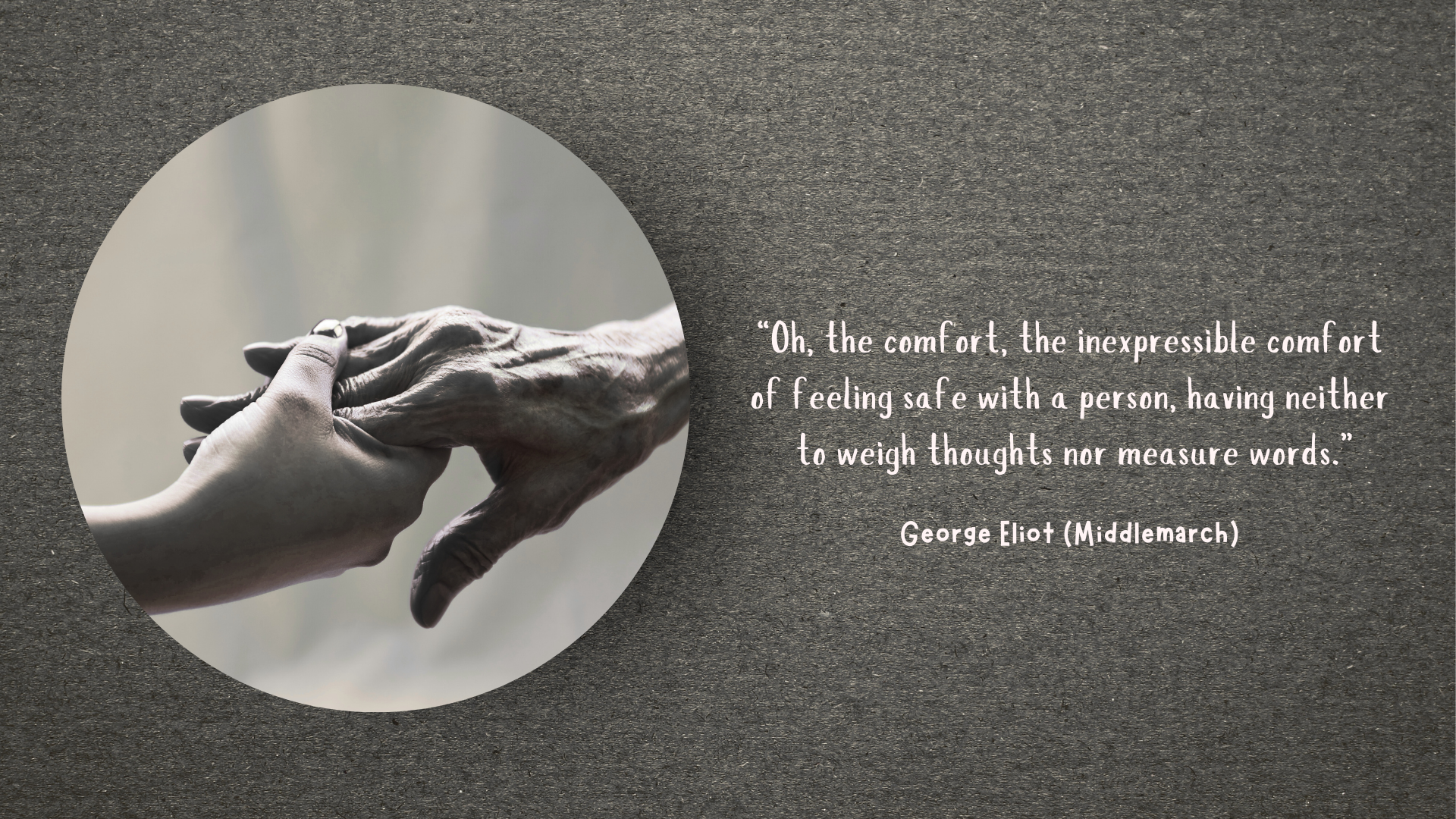
Because in the end, the ones we love never really leave us. They stay, nestled in the small corners of our hearts, in the memory of a hand that steadied ours. I do not have a photograph of her, but maybe that is for the best. Memories are far clearer that way.


 “The change should come from oneself,” says Fathima, a member of Al-Anon from Wayanad. Fathima was married off at the age of fourteen and at a tender age she had to endure the traumas caused by alcohol. “At first, I couldn’t digest his drinking but when the doctors said it is a disease I was relieved. Because I preferred the term disease for alcohol addiction I guess. But even after treatments he went back to drinking, making me lose confidence in treatments and even God. But a member of AA came to our house one day and made us aware of its methods. But the withdrawal symptoms he had shown were intolerable and I told the AA member about it. I thought the state was better when he was drunk. But the member gave me a phone number directing me to another wife who had been going through the same situation for years. That is Al-Anon. The relief I felt after talking to her was quite amazing and soon the wives and relatives of AA members started an Al-Anon at Wayanad,” says Fathima
 Mini, a government employee from Thiruvanathapuram, is one of the newest members of Al-Anon. It has been five-months since Al-Anon has started in the capital city and Mini was one of the founder members. It was with her husband Mini first came to an AA meeting and soon the need for Al-Anon was raised by the relatives thus came the first Al-Anon in the city.
 An Insomniac's Musings