
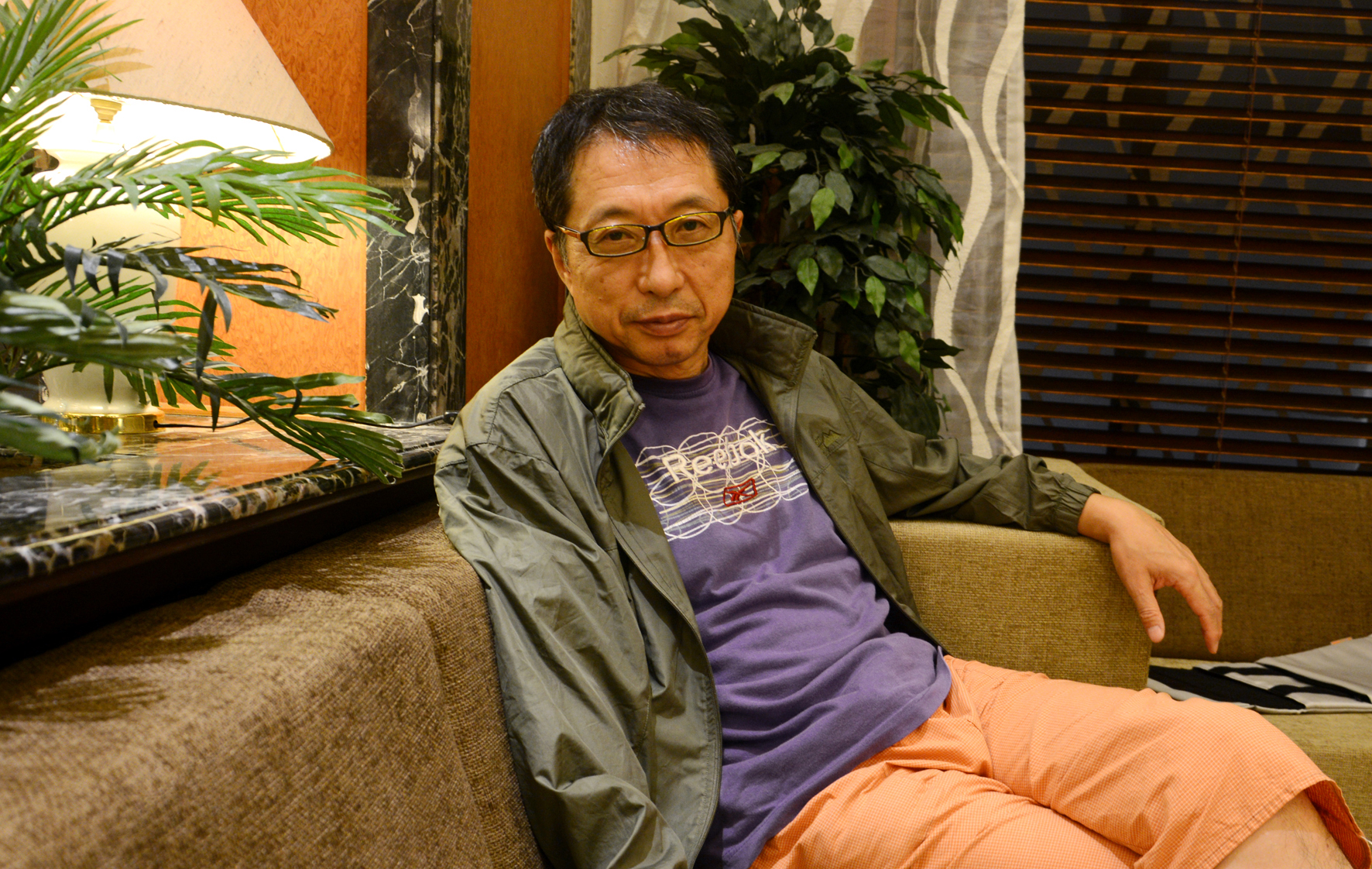
Pic: Manu R Mavelil
His almond-shaped-eyes shrink with pleasure whenever one mentions India or Indians. A slew of lines appear out of nowhere whenever he flaunts that adorable smile of his. Toshiaki Ruike, a Project Manager of TEC International, who moonlights as an artist or writer, is in the city to give his inputs on the Japanese Drinking Water project, which is underway for more than a decade. With the same deadpan expression with which he quipped Indians are much friendlier than Japanese, he offers a bag of fruits denoting Japanese do not meet people with an empty hand. And your empty hands twitch with embarrassment. But, the maverick in Ruike does not seem to mind, for this is not the first time he has been to India.
With his broken English he says, “I came to Kerala ten years ago to kick-start the Japanese drinking water project but the project does not seem to progress as fast as we hoped. But I got a chance to travel in and around the country. I have conducted a few exhibitions in Thiruvananthapuram, Hyderabad and New Delhi,” says Ruike, who is an 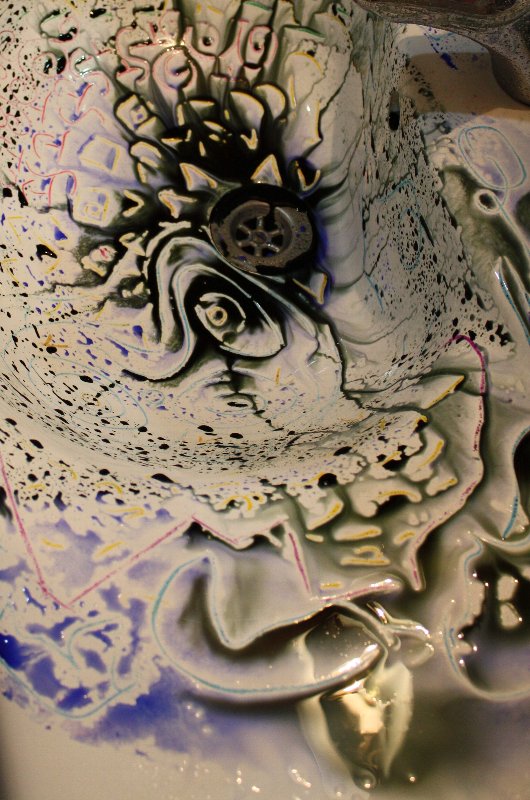 engineer by profession.
Unlike other artists, Ruike does not prefer to paint on paper or canvas. It is the tiled walls of hotel-room bathrooms that serve as his canvas. With Japanese Ink and oil pastels this artist creates spellbinding oeuvres of which he takes digital photographs. Once it is digitally imprinted he does not forget to wipe it off from the walls. Ask him why bathrooms and he says matter-of-factly, “I was literally living out of bags those days. So carrying around multiple canvases or papers would have been quite difficult. Today, because of my hectic schedules I don’t even get to paint on walls.”
Aomori, Japan, might be home to this soft-spoken man, but he keeps a special place in his heart for the vibrant wonder that is India. Once, the initial cultural shock worn off Ruike secretly started admiring the unconditional warmth the country exuded towards any one who crosses its borders.
“Japanese do not have as many dance forms as you guys do. The costumes, the colours, the dances at weddings, everything about India is rich with colours. Even the traditional artforms are quite enjoyable,” he says.
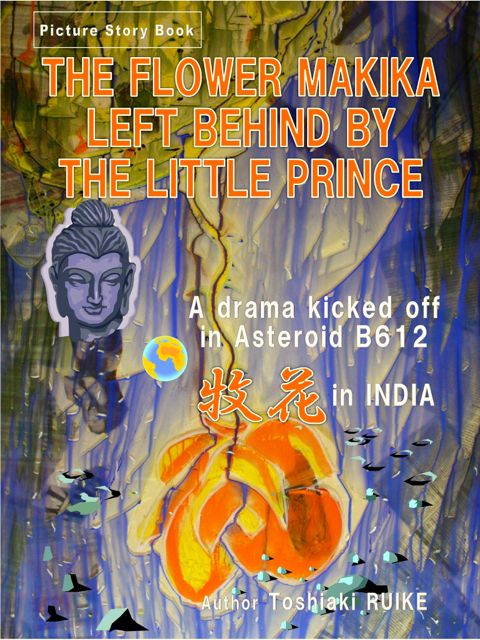
Ruike, who found solace in Yoga from India, had written three ebooks on Yoga in Japanese, which were published by Amazon. The latest from his kitty is a picture book, ‘The Flower Makika Left Behind by the Little Prince’. Antoine de Saint-Exupéry’s most cherished work ‘Little Prince’ is being revisited in Ruike’s book. He elaborates on the flower Makika that bloomed in Asteroid B612 in the book. Ruike makes it point to use his own illustrations in 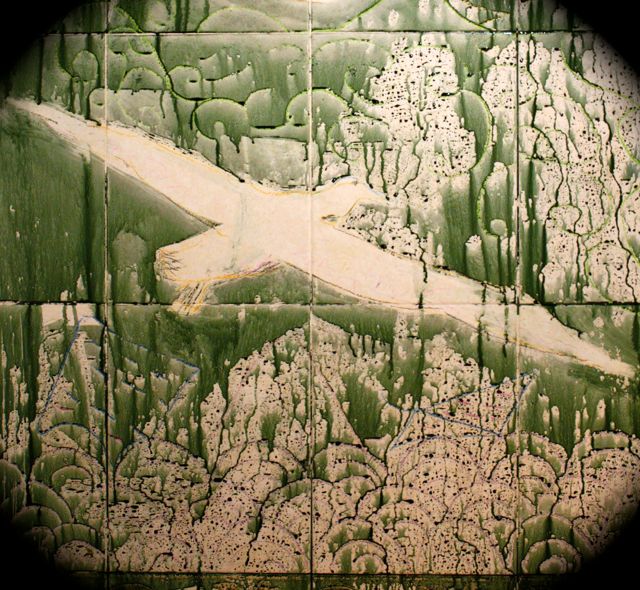 all his books.
“I am currently trying to translate Makika into English. As my English is not that good I am struggling a bit,” says Ruike with a smile. His interests do not stop at literature or art, he often finds time to produce videos on subjects that pique his intrigue and upload them in YouTube. It could be people, places and paintings.
In 2011, when the tsunami and earthquake hit the shores of Japan, Ruike’s parents lost their ancestral home in Aomori. Ruike saw to it that they were safely reinstated in a new home in Tokyo. In Japan, where natural disasters are as common as road accidents in India, he takes all the traumas he had endured in his stride.
Ruike, who is 60-years-old now, has many dreams to pursue once he’s retired.
“Today, my days are filled with work, work and more work. I want to be a full-time artist or writer once I am retired. In Japan, 65 is the maximum retirement age. I have tried to become a full-time artist in Japan but the people in there do not seem to admire my art. So I had to return to my old job,” says Ruike.
 Ruike’s youngest son, who did his MBA from the Delhi University is currently working with a Japanese company and his daughter is married and settled in Tokyo. He will return to Japan after his one month stint at Amritsar where he has to overlook the work being conducted by his company.
“I will be back to Kerala as soon as I can. I just love this place,” Ruike signs off with a lasting sayonara
 An Insomniac's Musings