Pic: Manu R Mavelil
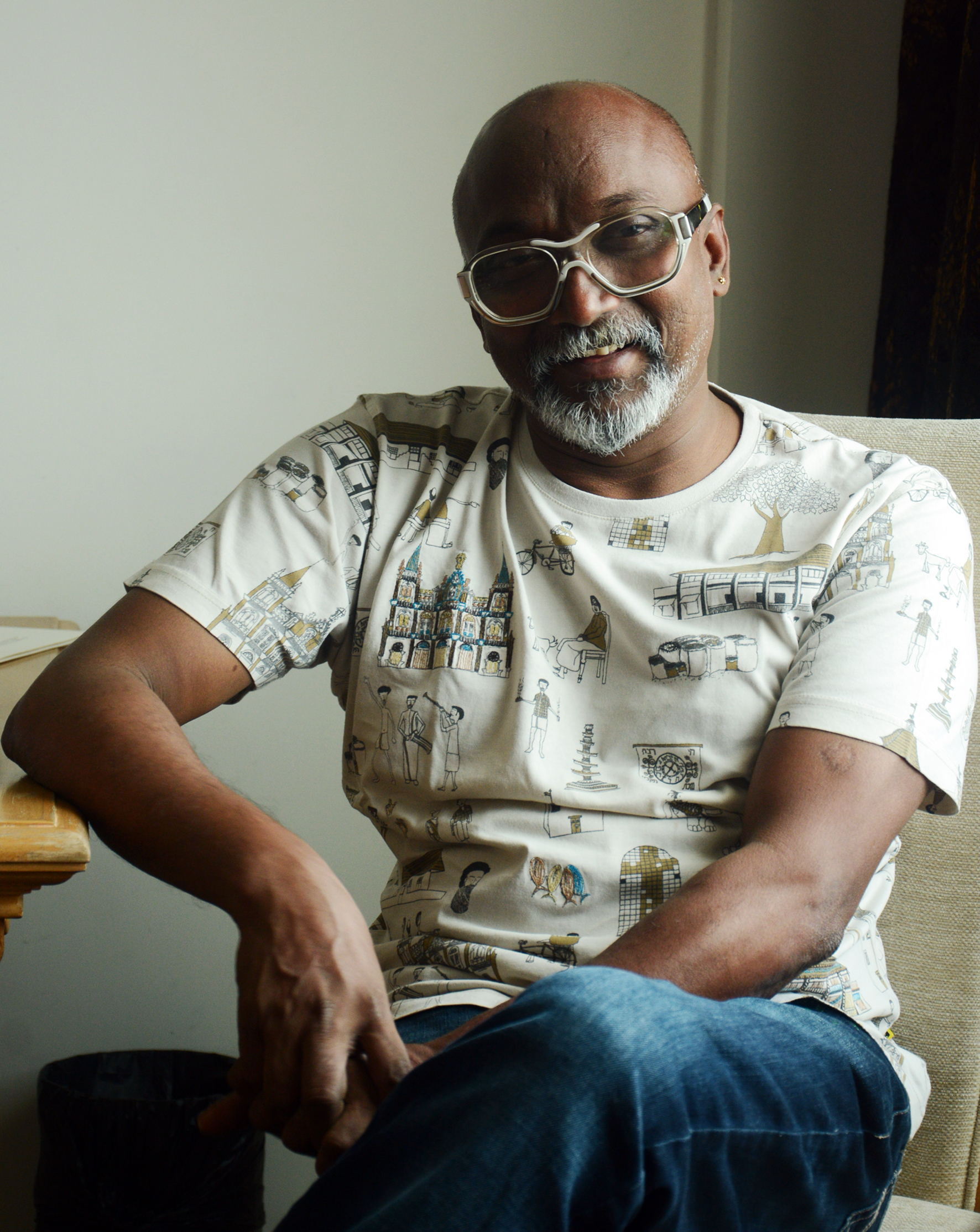
Emerald socks peeking out from a pair of neon red canvas shoes are what catches your eye, the moment you enter Bose Krishnamachari’s suite. From his quirky custom-designed eye-glasses to his off-white t-shirt thronging with cartooned people and buildings, everything about Bose is refreshingly unique. The eccentric streaks that one would expect from an artist, however, do not come hopping about disrupting the flawless conversation we were having. Instead, the man who instigated Kochi-Muziris Biennale, along with his friend and contemporary Riyas Komu, and thence put Kochi’s name in the global map, unassumingly narrated his life-story – a quintessential rags-to-riches tale – for the City Express readers. Bose was in the city to give a talk about ‘contemporary visual art’ to the city’s art lovers.
“I am very happy with the response we received for Biennale. Recently KPMG, one of the largest professional services companies in the world had done a study on Biennale and it specifically shows how it has rejuvinated arts in Kochi and Kerala and benefited India’s art scene as a whole,” says Bose.
For the uninitiated, Bose is one of the most promising names in the Indian contemporary art for his innovative multimedia visual installations and abstract paintings. Today, his name resonates in the realms of Indian art, with the likes of Subodh Gupta and Anjolie Ela Menon. Bose brushes off his illustrious journey as nothing special. However, this artist, who was born to a simple carpenter in Mangattukara, has an amazing story to recall.
“My childhood dream was to become a doctor. Hence, I took science for my pre-degree. I was always good in drawing so teachers used to show my record book as an example to other students in the class. But my mind was set on medicine. In 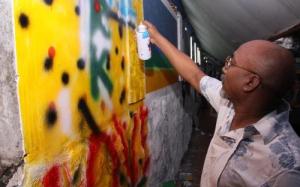 the second year I had an unknown illness which started off as some kind of haemophilia but later on it became something else. I was in coma for a while. This turned my life topsy-turvy as I started imagining that I am having some terminal disease such as cancer. I was taken to doctors all across the state. This lasted for around six years. That is when I started doing theatre,” says Bose. Bose was named after Subhashchadra Bose by his uncle, who was a staunch nationalist. His father’s name Krishnan, which was Bose’s surname, later changed to Krishnamachari adding his father’s profession, asari (achari) to it.
“We used to translate plays of Samuel Beckett to Malayalam and perform before an audience for Rs 2,000. While I did the acting bit my younger brother directed the plays. The money had to be split between many. Still I cherish those days. It was one such day that I came across a magazine called ‘Sankramanam’, where I read about Kerala Kalapeedam,”quips Bose. Bose and his elder brother set about to Kalapeedam in Kochi.
“There I have met many eminent personalities from various walks of life like Adoor Gopalakrishnan and Balachandran Chullikkad. Kalapeedam gave me immense exposure. I have joined a course in Flash Art in Thrippunithura to learn art. But the tutor, whose name I don’t remember, was reluctant to impart his knowledge. He said I was not yet in a stage to learn from a book. I quit the institute soon after,” says Bose. Even though Bose forgot his name, Bose Krishnamachari is not a name that one would easily forget.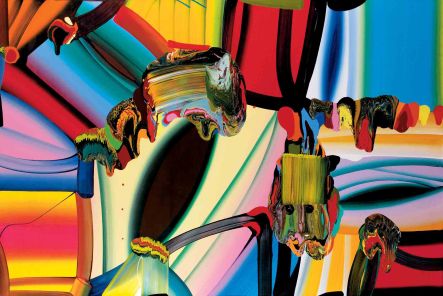 In 1985, he received his very first award from the Kerala Lalitha Kala Akademi. That is when he decided to take art seriously. One of his friends from Mumbai told him to join Sir JJ School of Art, where he would get to learn the nuances of art world. He set about to Mumbai in 1985 and wrote the entrance test of Sir JJ School of Art. Bose could only get in the next year due to some internal regional politics. However, he not only passed out with flying colours from JJ but also conducted an exhibition in the college gallery while he was a still a student. “My exhibition was the very first of its kind as the college had never exhibited students’ works before. It had the biggest turnout due to my connections with the external world. I was quite inquisitive so I used to frequent galleries and meet artists. Thus I interacted with people like Akbar Padamsee, and Laxman Shrestha and even visited them at their homes. Padamsee’s house was an adda of filmmakers. There I also got to meet people like Kumar Sahni,” he says. However, Bose’s very first exhibition was held in Kerala Kalapeedom where his dreams took wings. Adoor Gopalakrishnan inaugurated the show there.
“In Kerala, the exhibitions are conducted as a formal affair. Mumbai, it’s more casual. We just invite our friends and share a drink that’s about it. Jehangir gallery still follows traditional ways just like our Vyloppilly or the likes. Otherwise Mumbai art scene is very informal,” says Bose. Bose who calls himself a ‘Mumbaikar’ says Mumbai was his university when he strutted towards the formidable world of art. Later this Angamaly boy who didn’t know a single word in English received scholarship to do MFA from Goldsmiths College, University of London.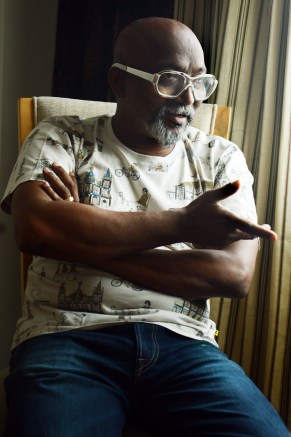
After his share of globe-trotting and experiencing the global art scenario, Bose came back with the sole resolve to make a difference in Indian art. He has curated many shows like Bombay Boys with his Mumbai Malayali artist friends like Riyas Komu and TV Santhosh. Biennale was, in some ways, an extension of that friendship.
“One day while I was at my home in Mumbai. The then cultural Minister of Kerala, MA Baby paid me a visit. When he came down I have invited my Malayali artist friends in Mumbai. He said he wants to conduct a show for children’s charity and we all said we do that on a daily basis. We donate many of our works for a good cause. So in between discussions the idea of biennale had come up. That is how biennale transpired,” says Bose. About the criticisms he had to face Bose says,
“I never imagined that we would be facing wrath from our own friends. We never exploited anything so I have no anger towards anybody. We had always held steadfast to the belief that we were, in some ways, propagating a platform for social change and maybe sooner than we realise art will be our last resort to unify a divided nation and people”. The biennale team is in full swing with their preparations for the second editon of Kochi-Muziris Biennale scheduled to open on December 12th of this year.
 An Insomniac's Musings