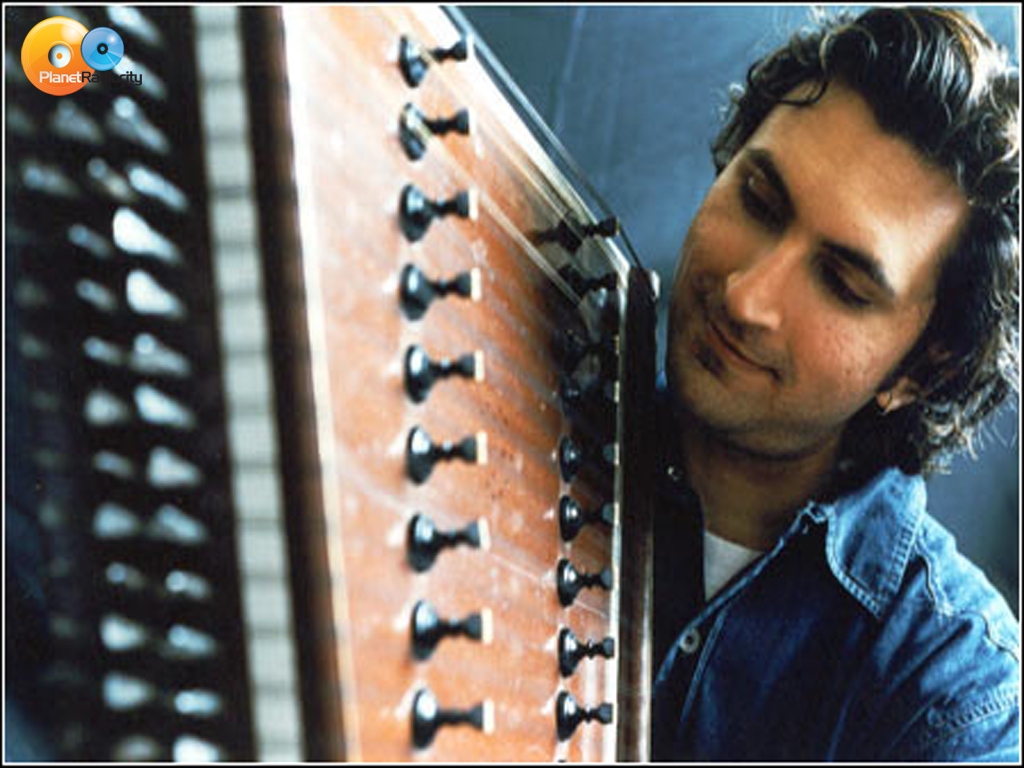
 His fingers float from one string to another ensnaring the audience to the intricate notes of Brindabani Sarang (Hindustani raga). Rousing his ‘Mohan Veena’ with a magical touch he plays ‘Hanumatodi’ (a Carnatic raga) with the same ease. Poly Varghese often sends shock waves across the audience by playing Hindustani and Carnatic compositions back and forth.
Interestingly enough, Poly, a Malayali, is the only musician who attempted Carnatic music on a Mohan Veena. Poly, who conducted the very first of his Kerala concerts in Adoor on August 15, is not a familiar face in Kerala and one wonders why.
“For me music is a lifestyle. I don’t want to make it a lucrative business like others. In Kerala I have seen certain musicians using their little knowledge of Hindustani to gain name in movie business. It is not that I have never attempted film music but for me classical music deserves much more respect and exposure than that,” he says. Poly concedes that could be the reason why Keralites find it difficult to accept him. Poly has a few films to his credit such as ‘Kootilekku’ for which he has done composing.
Poly often makes a sight for his onlookers with his wild mane and sen-like disposition. There’s Sufism in every word he pronounces.
“I am from a family deeply rooted in literature and writing. My father was a renowned journalist. So my upbringing has a lot to do with my affinity towards arts. However, I don’t know why I got interested in classical music as there were no musicians in our family,” says Poly. However, Poly’s childhood was rich with the Carnatic vocals lent to him by M L Vasanthakumari,
M S Subbalakshmi and the likes. When children his age chose silly games, eight-year-old Poly gave his ear to the old Murphy radio that opened a wide world of classical music before him.
“That is why I joined Kalamandalam once I completed my tenth. There I was introduced to deeper and meaningful aspects of music. I learnt my first lessons of Carnatic music from Kalamandalam. I was a percussionist there. Later, one of my gurus there prompted me to go to Shantiniketan in Kolkata to learn more about music and Rabindrasangeetham. That was one of the best moves I have made in my life. I grew up reading Mahaswetha devi, Ashapoorna Devi and Tagore. Hence the lure was too strong to ignore,” says Poly. Without any money Poly set about to Kolkata without his family’s consent. At Shantiniketan, he found his calling.

With Pandit Vishwa Mohan Bhatt
One among the five connoisseurs of Mohan Veena, Poly was fortunate to learn the techniques directly from the creator of ‘Mohan Veena’, Pandit Vishwa Mohan Bhatt. Poly, who got to experience Bhatt’s music from a television programme during his childhood years, was easily swayed away by his mesmerising music and facial expressions. Once when Bhatt visited Kolkata, Poly met him in person and admitted how serious he was about learning Mohan Veena. Bhatt was convinced by his earnestness and asked Poly to come to Rajasthan to learn from him. After five years of intense training under the Guru, Poly came back and settled in Chennai.
“It takes three years to make a Mohan Veena from scratch. So if you are not dedicated enough, there is no point in learning it. That is why there are not many takers for this instrument. I don’t mind teaching people the techniques as long as they are not learning it to make money or to enter film industry,” says Poly. Poly who sees great future in his four-year-old daughter, however, feels that only if she comes up with something of her own, she can be considered a musician. “Otherwise just like every other profession she would be choosing the obvious because her father is a musician. I want her to prove her mettle before devoting herself to music,” says Poly.
Poly, who has an enviable repertoire as a musician, has also tried his hand in literature, theatre and what not. He still writes spellbinding poems in Malayalam.
 “I have had Malayali directors asking whether I can carry Mohan Veena like a harmonium and play it for a scene. If you don’t understand music that’s fine but why disrespect our age-old culture. Money is not everything, it is just a piece of paper for those who doesn’t have any use of it. One should think beyond that,” fumes Poly. Let’s just hope Poly and his inseparable Mohan Veena would be a constant presence in every musical event to be held in the state henceforth.


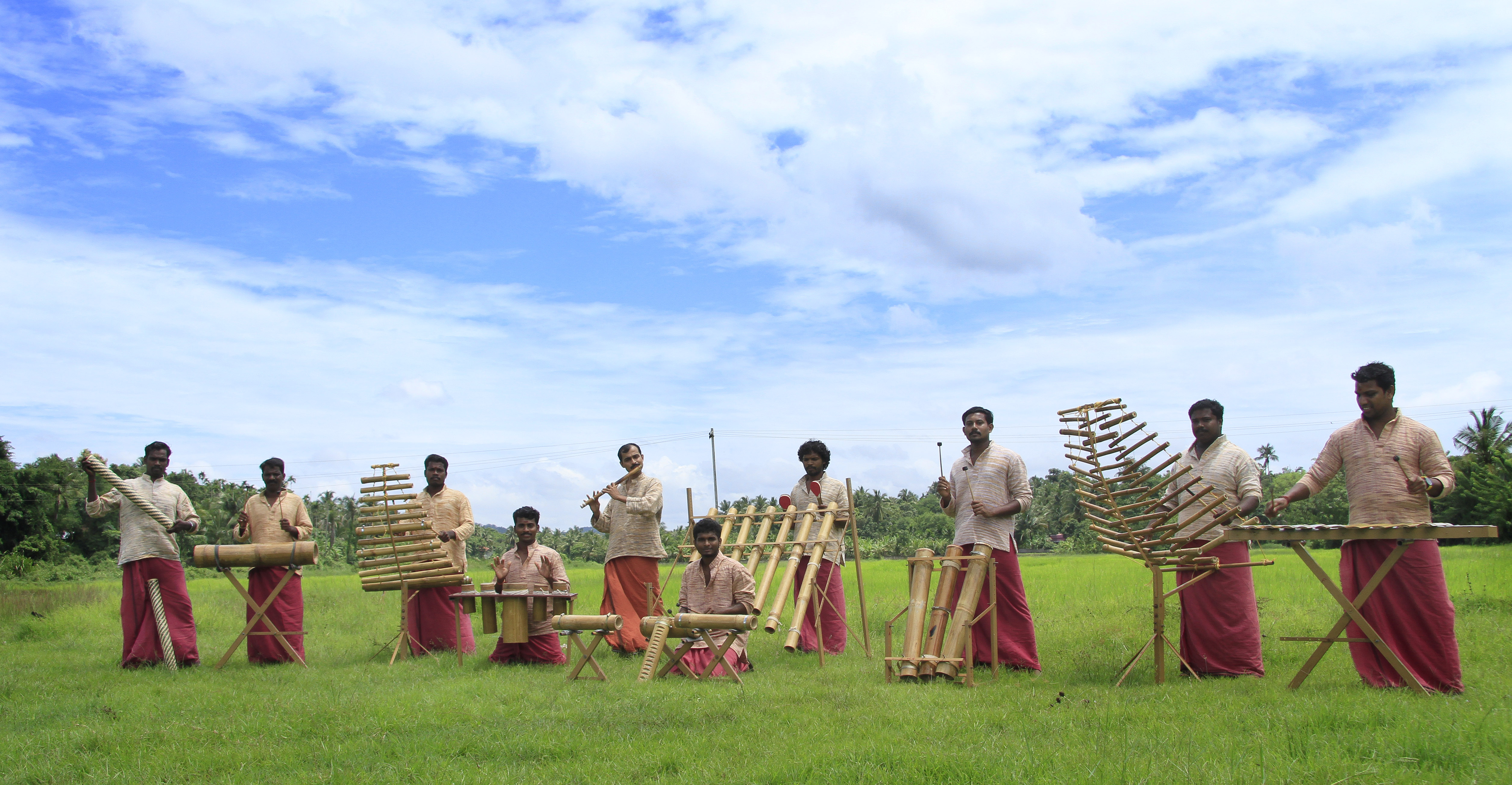

 “There was a Centre for Folklore Studies in Thrissur. I worked closely with the organisation. Their work made me understand the value of our culture and tradition, and the pressing need for preserving them. I joined hands with a few like-minded friends, and Vayali was born,” he adds.
 Vayali has performed at the Kerala Kalamandalam, Fireflies Festival of Sacred Music in Bangalore, in an ensemble with the Japanese Bamboo Orchestra Rakutakedan at Kalpetta and the CMS Vatavaran Short Film Festival in New Delhi.
 An Insomniac's Musings