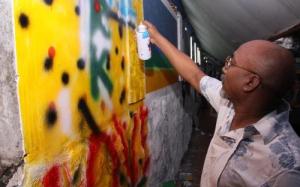
 For a rank outsider, who knows Australia from the movies and cricket matches, it is the land of Hugh Jackman, Shane Warne and koala bears. But, the little known factor is that it is also home to 500 or more indigenous aboriginal tribes, the oldest in the history of the world. This small continent revels upon such exquisite traditions hidden beneath the picturesque view of its snow-capped alps, lush greens and the deep blue sea. Beyond its contributions to cricket and cinema, Australia has a remarkable tale to recount from the time Dutchman Willem Janszoon discovered it in 1606. Sedunath Prabhakar, a Malayali, who took off to Australia in 2008, to pursue art, has done extensive research on Australian history and translated it into a 50-metre-long canvas. Engraved with the portraits of 50 Australian personalities from various walks of life, who had contributed largely to the country’s betterment, Sedunath’s oeuvre is the first of its kind in the history of Australia.
“This painting is my small attempt to narrate the Australian history through art. I am planning to exhibit it on November this year at Melbourne. My researches included interviews, books and historical references to get the exact information regarding the people. It took 1.5 years to complete the work done in acrylic,” says Sedunath.
Sedunath painstakingly handpicked personalities, who made waves in the country, starting from the 1700s to late 1900s. Impervious to the effect she had on the viewers, Emily Kame Kngwarreye flaunts her lopsided smile and looks up from Sedunath’s canvas. This aboriginal painter was one of the most prominent contemporary Indigenous Australian artists in the world. Following her comes John Monash, who played a cardinal role during the First World War, with his commanding 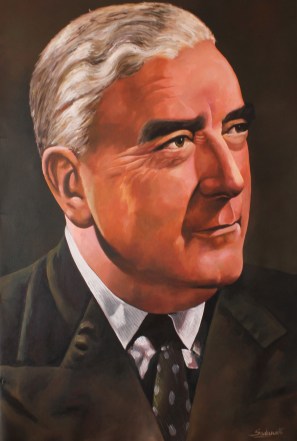 abilities. Sedunath doles out spaces for Patrick White and Elizabeth Blackburn equally, the Nobel prize winners in literature and medicine respectively and also paints Robert Menzies, a man who won prime minister post twice.
Sedunath, a full-time artist at Melbourne gained a newfound mojo in Australia, where he conducted multiple group shows.
“I got a chance to participate in four group exhibitions in Melbourne, Australia. The first exhibition was conducted by Dandenong Art community for the ‘standing at the cross road’ award. I won the first prize from the 200 non-Indian participants. I am happy to be the first Indian who won this award,” says Sedunath.
Back in the day, when Sedunath was just Pradeep Prabhakar (his official name), he strived to carve a name in the Kerala’s art scene. Being a full-time artist in Kerala was never an easy task. He resigns to a brooding mood when asked about his struggling days in Kerala.
“In Kerala, people don’t appreciate original art. They are looking for copies. I could not make my ends meet with just art. I had taken up a job as a graphic designer,” he recalls. He moved to Gujarat after his degree and in Baroda he found his destiny.
“My brother was in Gujarat at the time when I went to Baroda. There I got a chance to paint Jain history in one of their temples. The priest who gave me the assignment spent a lot of time with me to narrate the wide history of Jainism. That is when the world looked up to notice me,” says Sedu. He was given the ‘Hemaprabhu Guru’ award for his massive work on Jain tradition done on oil paint. Later, he did his fine arts degree from the prestigious Baroda School of Art, where he gathered a broader perspective on life, the complex aspects of human society and more.
When asked what inspires his works he says, “The relationship between the nature and human beings is a recurring theme in my works. My works also explore the intricacies involved in religion and its interplay with society. Like all true artists I used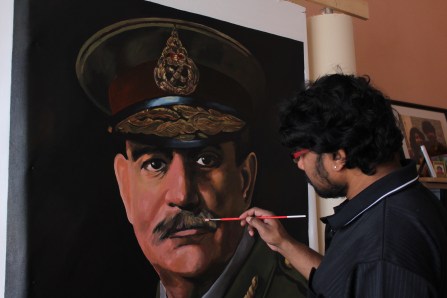 to draw inspiration from tradition especially its parallel streams.”
Sedunath’s interests are not limited to just art. This multi-talented artist, who has a black-belt in Karate, also dabbles with literature and Carnatic music in his spare time. Sedunath has a novelette, Bhroonam, published in 2001 to his name as well.
Sedunath plans to delve deep into the rich artistic tradition of Australia and integrate it with his own during his stay in the country.
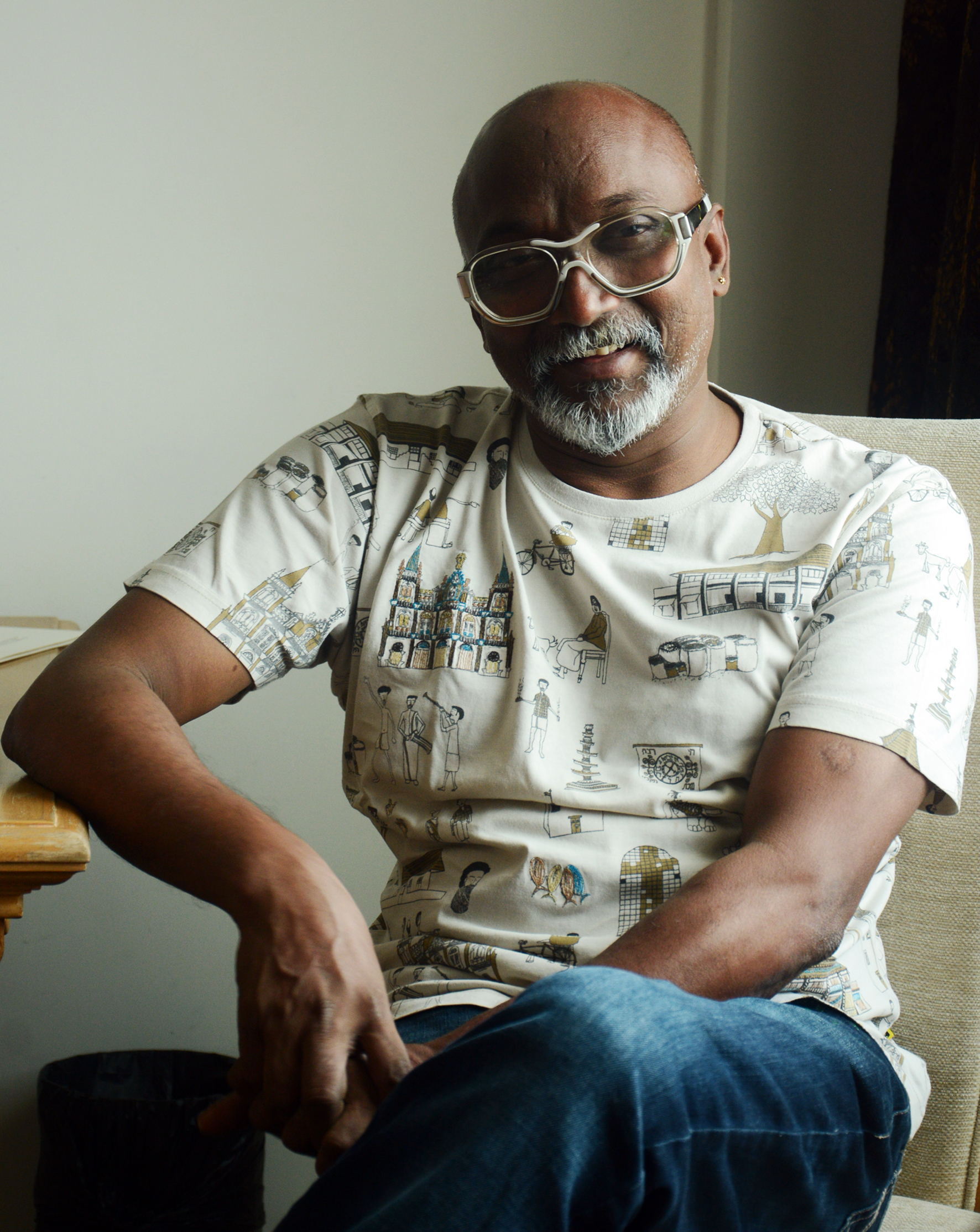
 the second year I had an unknown illness which started off as some kind of haemophilia but later on it became something else. I was in coma for a while. This turned my life topsy-turvy as I started imagining that I am having some terminal disease such as cancer. I was taken to doctors all across the state. This lasted for around six years. That is when I started doing theatre,” says Bose. Bose was named after Subhashchadra Bose by his uncle, who was a staunch nationalist. His father’s name Krishnan, which was Bose’s surname, later changed to Krishnamachari adding his father’s profession, asari (achari) to it.
 In 1985, he received his very first award from the Kerala Lalitha Kala Akademi. That is when he decided to take art seriously. One of his friends from Mumbai told him to join Sir JJ School of Art, where he would get to learn the nuances of art world. He set about to Mumbai in 1985 and wrote the entrance test of Sir JJ School of Art. Bose could only get in the next year due to some internal regional politics. However, he not only passed out with flying colours from JJ but also conducted an exhibition in the college gallery while he was a still a student. “My exhibition was the very first of its kind as the college had never exhibited students’ works before. It had the biggest turnout due to my connections with the external world. I was quite inquisitive so I used to frequent galleries and meet artists. Thus I interacted with people like Akbar Padamsee, and Laxman Shrestha and even visited them at their homes. Padamsee’s house was an adda of filmmakers. There I also got to meet people like Kumar Sahni,” he says. However, Bose’s very first exhibition was held in Kerala Kalapeedom where his dreams took wings. Adoor Gopalakrishnan inaugurated the show there.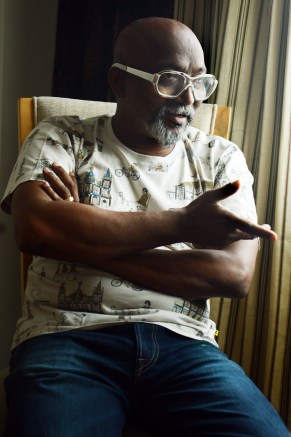
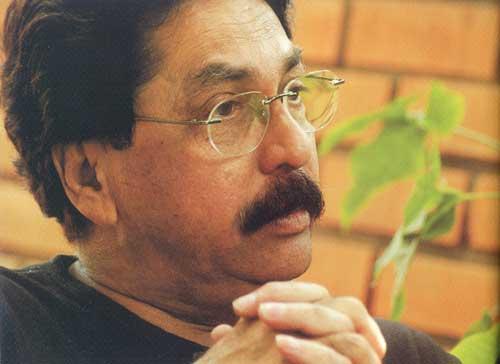
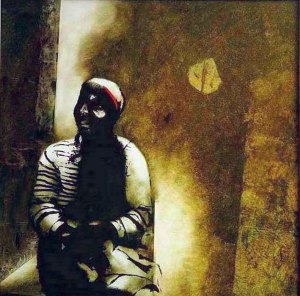 The solitude series which portrays man in his weakest of moments contemplating, nursing his mental wounds, all battered and torn, is a representation of the artist’s own agony. Similarly, every painting of Yusuf has some story or other to narrate to the viewers. His reading habit is what led him to do a series on books, which has inspirations from Chinese sculptures to K C S Panicker. After visiting Vaikom Muhammed Basheer at his home, Yusuf had come up with the idea of a series on Basheer and his works. Though it materialised only after Basheer’s death, many still consider those as his best of works.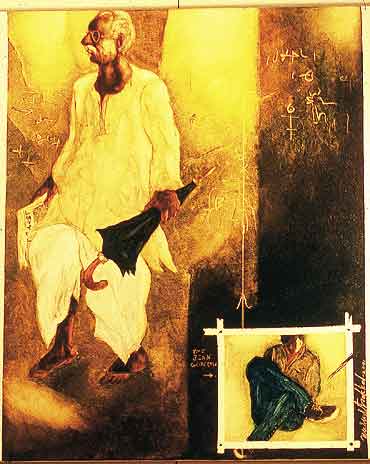
 An Insomniac's Musings